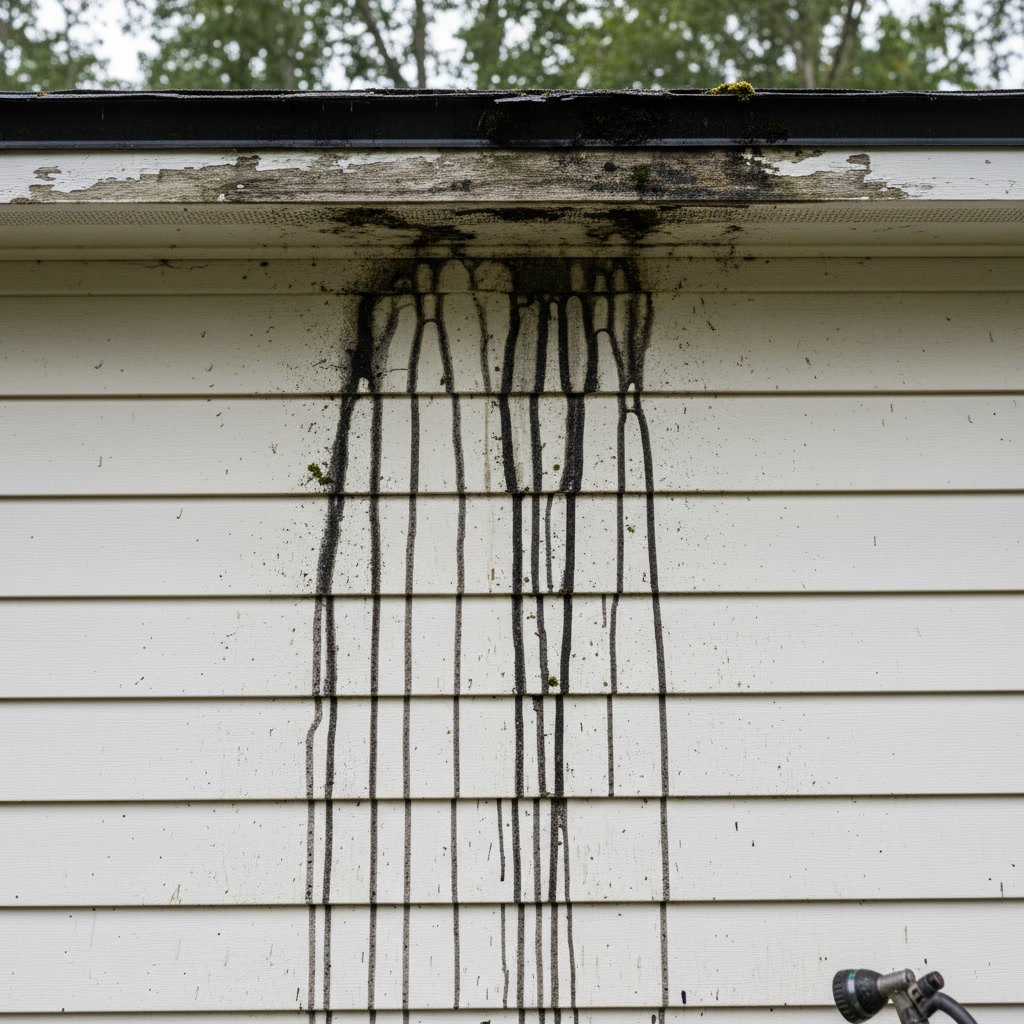
Black streaks on vinyl siding stem from algae, mold, artillery fungus, and environmental pollutants that bond to the surface. To remove black streaks siding safely, use a soft washing technique with a cleaning solution of one part bleach to ten parts water, applied from bottom to top, then rinsed thoroughly with low-pressure water. Avoid high-pressure washing, stiff brushes, and abrasive cleaners that can crack, warp, or fade vinyl. Most homeowners can tackle light staining with hand tools, but persistent black streaks often require professional equipment and expertise.
Why Vinyl Siding Develops Black Streaks
Vinyl siding attracts organic growth because it holds moisture in shaded areas and provides a textured surface where spores can anchor. The black streaks you see are usually a combination of algae, mold, mildew, and a fungus called Gloeocapsa magma that thrives in humid climates. Connecticut’s seasonal humidity creates ideal conditions for these organisms to multiply rapidly on north-facing walls and areas under roof overhangs.
Artillery fungus presents a different challenge. This wood-mulch dwelling organism shoots sticky spores up to 20 feet high, leaving tar-like black spots that bond chemically to siding. Unlike algae, these spots resist simple cleaning and can permanently stain if not treated quickly. Pollution, dirt, and oxidation also contribute to dark streaking, especially along seams and lower panels where runoff concentrates contaminants.
The Danger of Using High Pressure on Vinyl
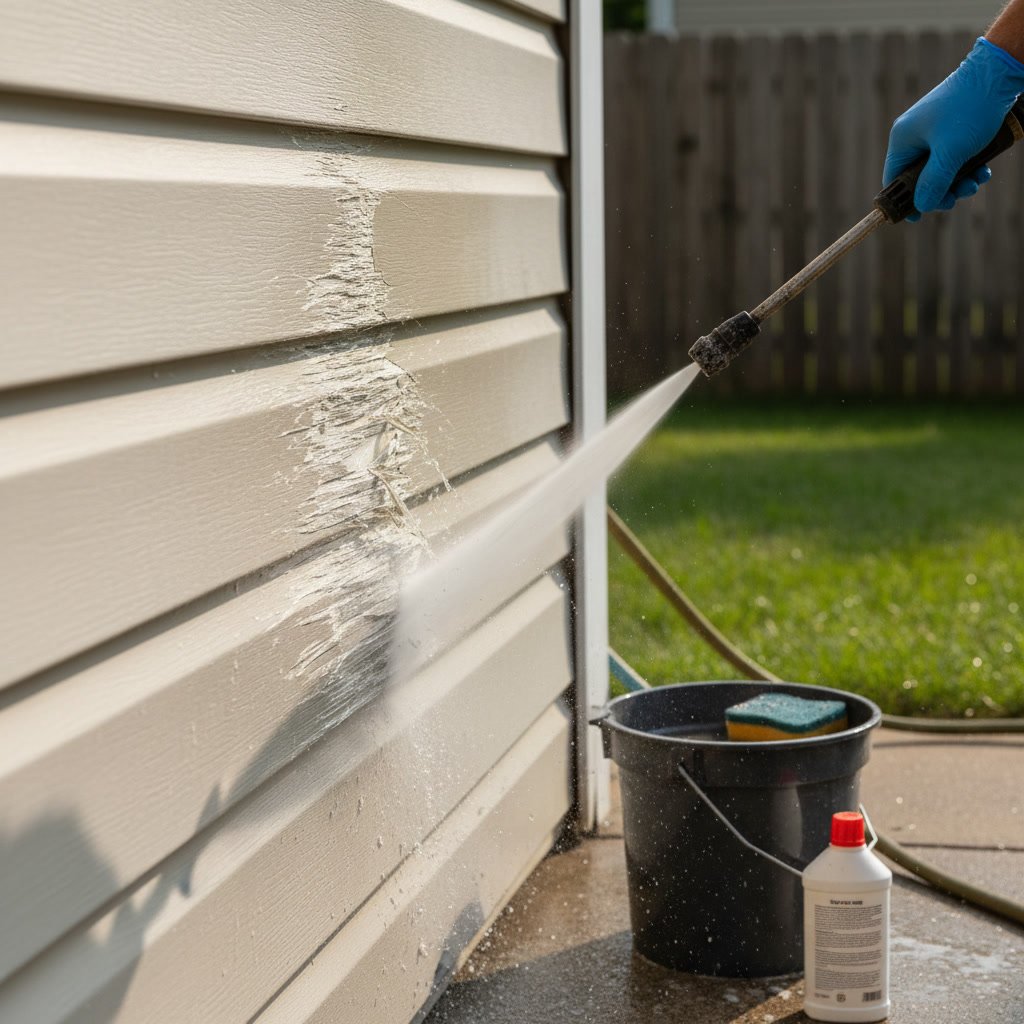
Vinyl siding is engineered to interlock horizontally, creating a weather barrier through overlapping edges rather than a sealed surface. Water forced behind the siding by high pressure can saturate insulation, rot sheathing, and promote interior mold growth. Pressure above 1,500 PSI can also crack panels, loosen seams, and strip the protective UV coating that prevents fading and brittleness.
Even moderate pressure applied at the wrong angle can lift panel edges or dislodge trim pieces. The locking mechanism on most vinyl products is designed to allow thermal expansion, not resist forceful water intrusion. Homeowners who rent consumer-grade pressure washers often use nozzles that concentrate 2,000 to 3,000 PSI into a narrow stream, unknowingly causing damage that appears months later as warping or water stains inside the home.
How to Prepare Your Siding for Safe Cleaning
Start by inspecting the entire exterior for loose panels, damaged caulk around windows, and gaps near utility penetrations. Secure any loose sections and seal openings to prevent water intrusion. Remove outdoor furniture, cover electrical outlets, and close all windows tightly. Trim back vegetation at least two feet from the walls to improve airflow and reduce future algae growth.
Wet down plants and landscaping thoroughly before applying any cleaning solution. Even diluted bleach can damage foliage, so pre-soaking helps protect root zones. Cover delicate shrubs with plastic sheeting if they sit directly beneath the work area. Check the weather forecast and choose a cool, overcast day when temperatures stay between 50 and 70 degrees. Hot surfaces cause cleaning solutions to evaporate too quickly, while freezing conditions prevent proper rinsing.
The Right Cleaning Solution for Black Streaks in Cromwell
A basic bleach solution effectively kills algae, mold, and mildew without damaging vinyl. Mix one gallon of household bleach with ten gallons of water in a garden sprayer or bucket. For stubborn stains, add one cup of trisodium phosphate (TSP) or a non-phosphate substitute and two cups of powdered laundry detergent. This combination breaks down organic growth while the surfactants help lift dirt.
Oxygen bleach offers a gentler alternative for homeowners concerned about landscaping or septic systems. Though less aggressive than chlorine bleach, it still removes most black streaks when given sufficient dwell time. Avoid ammonia-based cleaners or any product containing solvents, as these can react with vinyl additives and cause discoloration. Commercial vinyl siding cleaners work well but cost significantly more than homemade solutions with comparable results.
Step by Step Application Method
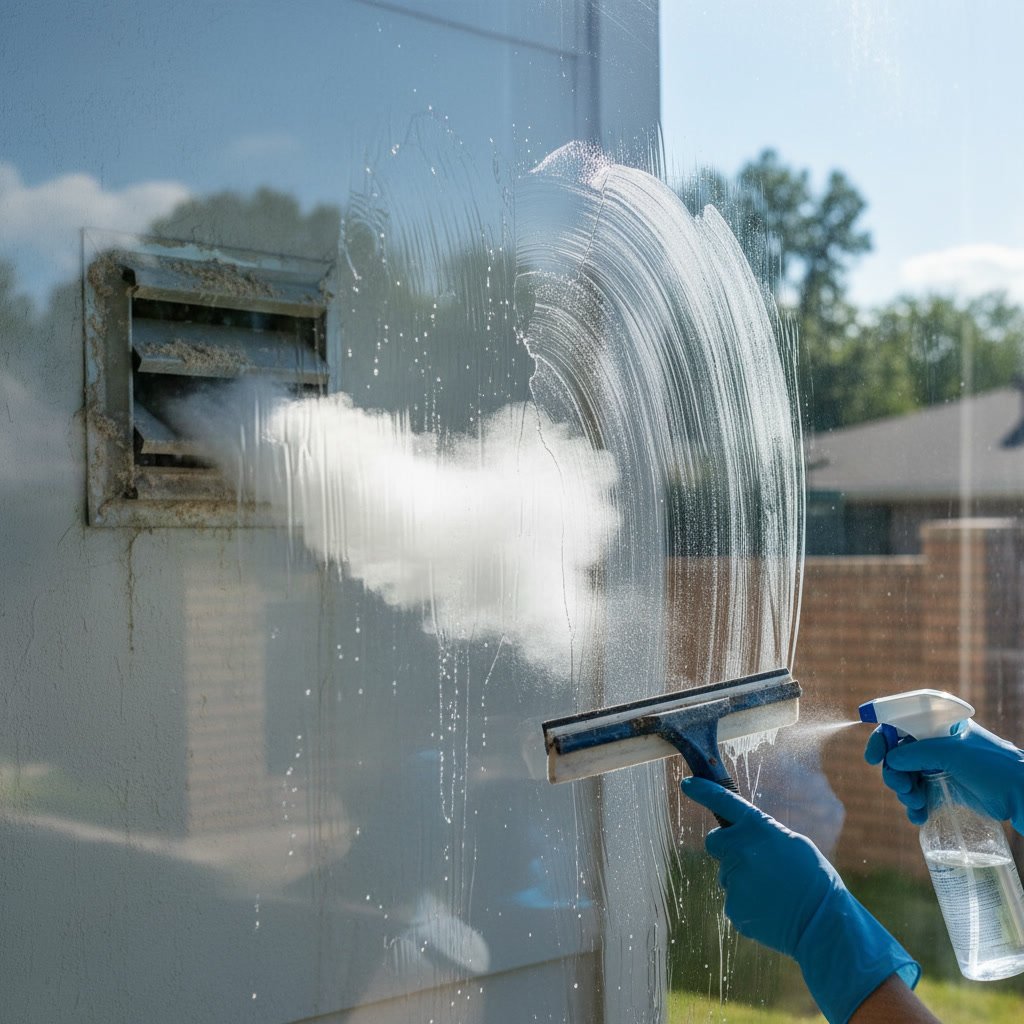
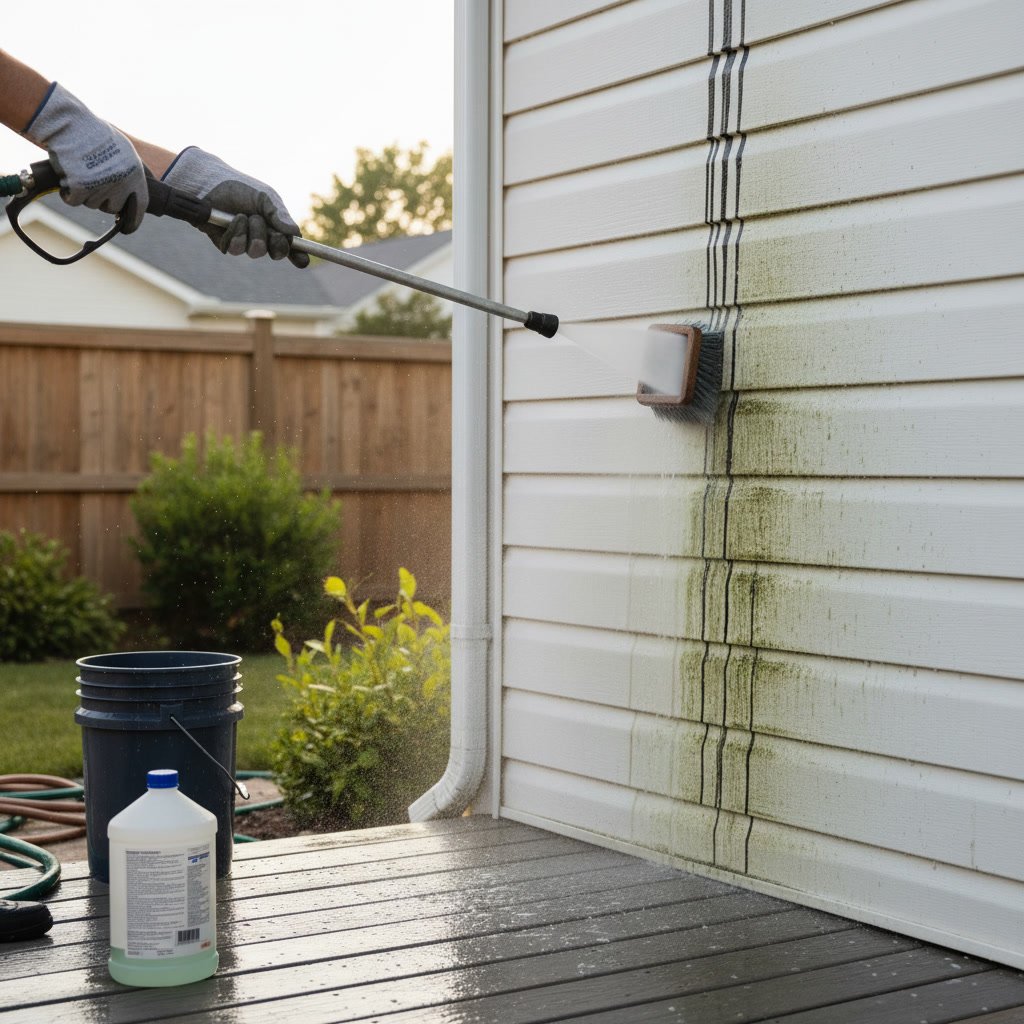
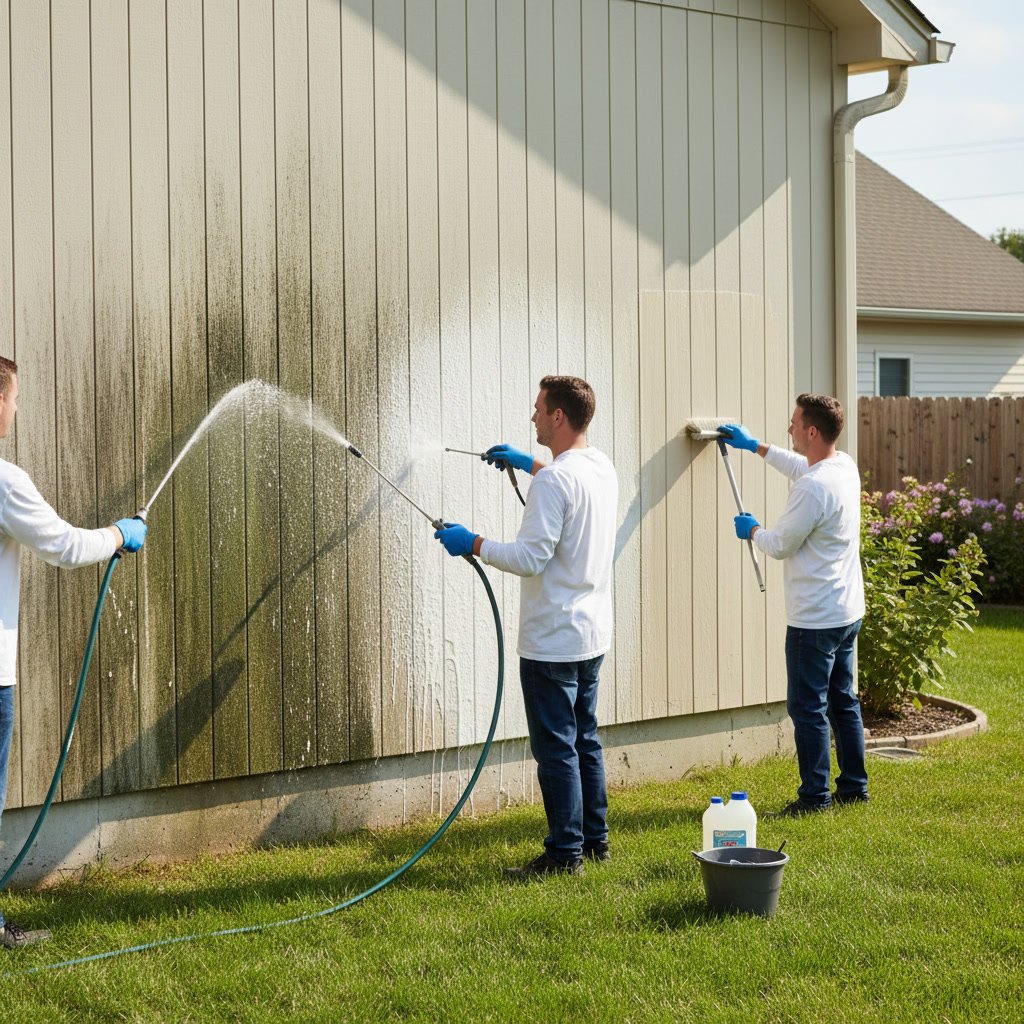
Apply the cleaning solution from bottom to top using a pump sprayer or soft-bristle brush attached to an extension pole. Working upward prevents streaking, as dirty runoff won’t flow over already-cleaned sections. Spray or brush in a consistent horizontal pattern, covering about 10 feet of wall at a time. Let the solution sit for five to ten minutes, watching for the black streaks to lighten or dissolve.
Gently scrub stubborn areas with a soft car-wash brush or sponge, using circular motions rather than aggressive back-and-forth strokes. Never use stiff bristles, steel wool, or abrasive pads that will scratch the vinyl surface and create texture where future dirt accumulates more easily. Rinse each section thoroughly with a garden hose equipped with a fan-tip nozzle, working from top to bottom to flush away dissolved contaminants and cleaning residue.
Handling Artillery Fungus and Stubborn Tar Spots
Artillery fungus spores contain a sticky resin that standard cleaners rarely remove completely. For the best results, scrape gently with a plastic putty knife or credit card edge to lift the bulk of each spot without gouging the vinyl. Apply a paste of baking soda and water directly to remaining stains, let it sit for 15 minutes, then scrub lightly with a non-abrasive pad.
Some stains will have etched into the vinyl’s surface layer and cannot be removed without taking color with them. In these cases, a professional exterior cleaning service may use a very mild solvent or specialized stain remover formulated for vinyl. Replacing heavily stained panels becomes the only option when chemical bonding has permanently altered the material.
When Soft Washing Outperforms DIY Methods
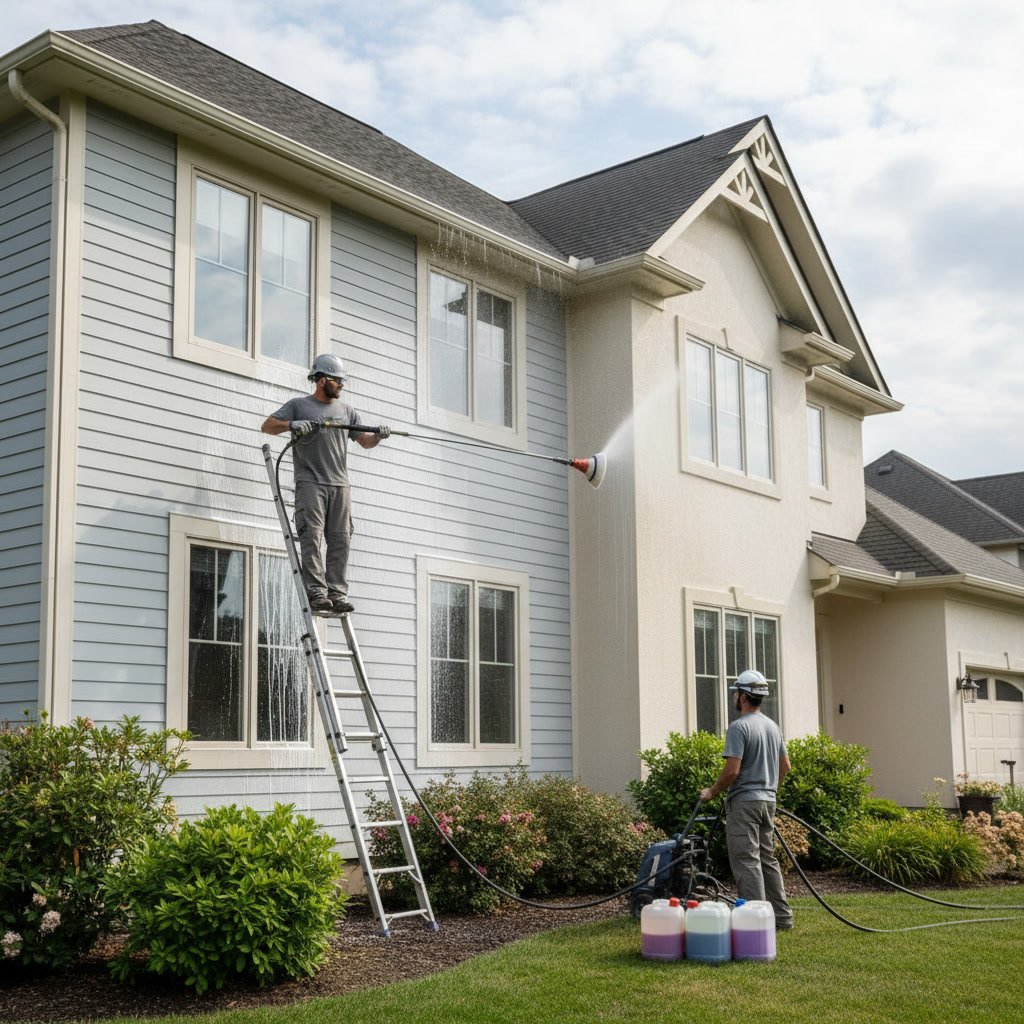
Soft washing systems deliver cleaning solutions at 100 to 500 PSI, providing enough pressure to apply product evenly across tall walls without the risk of damage. Professional equipment uses proportioners that mix concentrated cleaners with water automatically, ensuring consistent ratios and eliminating guesswork. This approach proves especially effective on two-story homes where extension ladders and hand tools become dangerous.
Trained technicians understand how different siding profiles, textures, and colors respond to various chemical formulations. They adjust dwell times, concentration levels, and application techniques based on the specific stains present and the age of your siding. For homeowners dealing with recurring black streaks or extensive coverage, professional house washing often costs less than repeated DIY attempts when you factor in time, materials, and potential repair costs from improper cleaning.
Common Mistakes That Cause Siding Damage
Using undiluted bleach or concentrations stronger than a 1:10 ratio can fade colored vinyl and weaken the material over time. Allowing cleaning solutions to dry on the surface before rinsing creates white residue and can leave permanent streaks. Spraying directly into seams, vents, or under panel edges drives water into wall cavities where it saturates insulation and wood framing.
Another frequent error involves cleaning only the stained sections rather than the entire wall. This approach creates obvious color differences between treated and untreated areas, as the cleaning process removes accumulated oxidation along with the black streaks. For consistent results, always clean full walls from corner to corner, even if only portions show visible staining. This practice also helps identify other maintenance needs, much like thorough window cleaning reveals frame damage or seal failures.
Preventing Future Black Streaks and Stains
Annual cleaning prevents organic growth from establishing deep root systems in vinyl’s surface texture. Schedule this maintenance in spring or fall when temperatures support effective chemical action without risking plant damage from heat stress. Trim trees and shrubs to increase sunlight exposure and air circulation around your home, as shaded, stagnant areas promote rapid algae and mold colonization.
Replace wood mulch near the foundation with rock, rubber, or synthetic alternatives that don’t harbor artillery fungus. If you prefer organic mulch, maintain at least a six-foot buffer between mulched beds and vinyl siding. Installing properly functioning gutters prevents roof runoff from cascading down walls and concentrating moisture in specific areas. Consider zinc or copper strips installed at the roof peak, as rainwater washing over these metals creates a mild fungicide that inhibits growth on siding below.
Protecting Your Investment with Professional Care
Vinyl siding represents a significant investment in your home’s appearance and weather protection. Regular maintenance extends its lifespan from the typical 20 years to 30 or more, while neglect leads to premature replacement and costly repairs to underlying structures. Black streaks signal active biological growth that will worsen each season, eventually penetrating deep enough to require aggressive cleaning methods that risk surface damage.
Professional cleaning delivers superior results because specialized equipment and training allow technicians to match the treatment to the problem. The difference between soft washing and DIY scrubbing becomes obvious when you compare the final appearance. Professionals also identify potential issues like failing caulk, damaged flashing, or developing cracks that homeowners typically miss until water intrusion causes interior damage.
Power washing services extend beyond just removing visible stains. They protect your home’s structural integrity by eliminating moisture-trapping contaminants before they compromise the building envelope. This preventive approach saves money over the long term and maintains the curb appeal that supports property values in competitive real estate markets.
Restoring Your Home’s Appearance Safely
Clean vinyl siding transforms your home’s entire appearance, making it look well-maintained and cared for. The methods outlined above work effectively for most black streaks when applied correctly and patiently. Focus on gentle techniques, appropriate cleaning solutions, and thorough rinsing to achieve professional-looking results without risking damage to your siding or the structures behind it.
Remember that success depends on matching your approach to the specific stains you face. Light algae responds to simple solutions, while artillery fungus and deeply embedded mold require more aggressive treatments and sometimes professional intervention. Prioritize safety over speed, and don’t hesitate to call for help when stains prove stubborn or your home’s height makes DIY cleaning dangerous.
Patriot Pressure Washing brings military precision and proven techniques to every vinyl siding cleaning project. Our soft washing systems remove black streaks safely while protecting your home’s exterior and surrounding landscaping. If your siding shows stubborn staining or you prefer professional results without the DIY hassle, reach out at +18606612407 to schedule a free estimate.