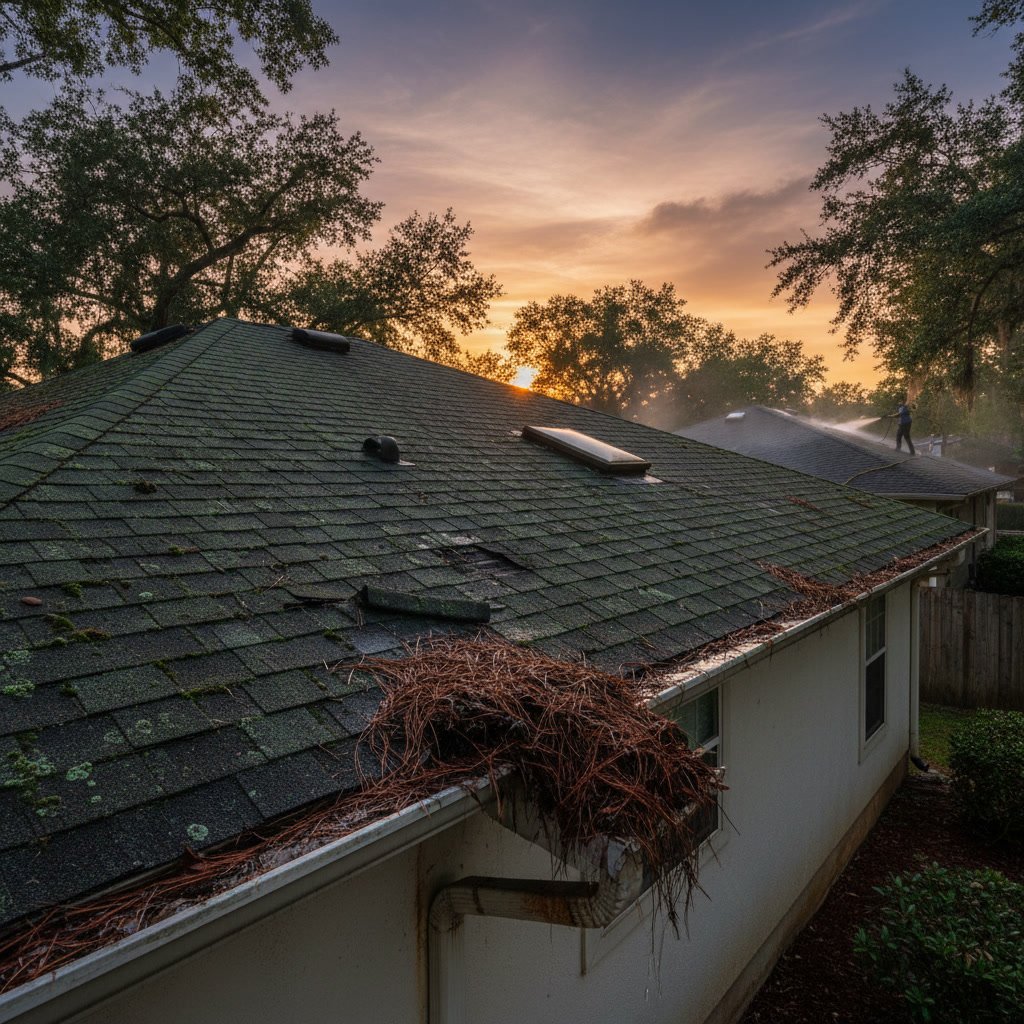
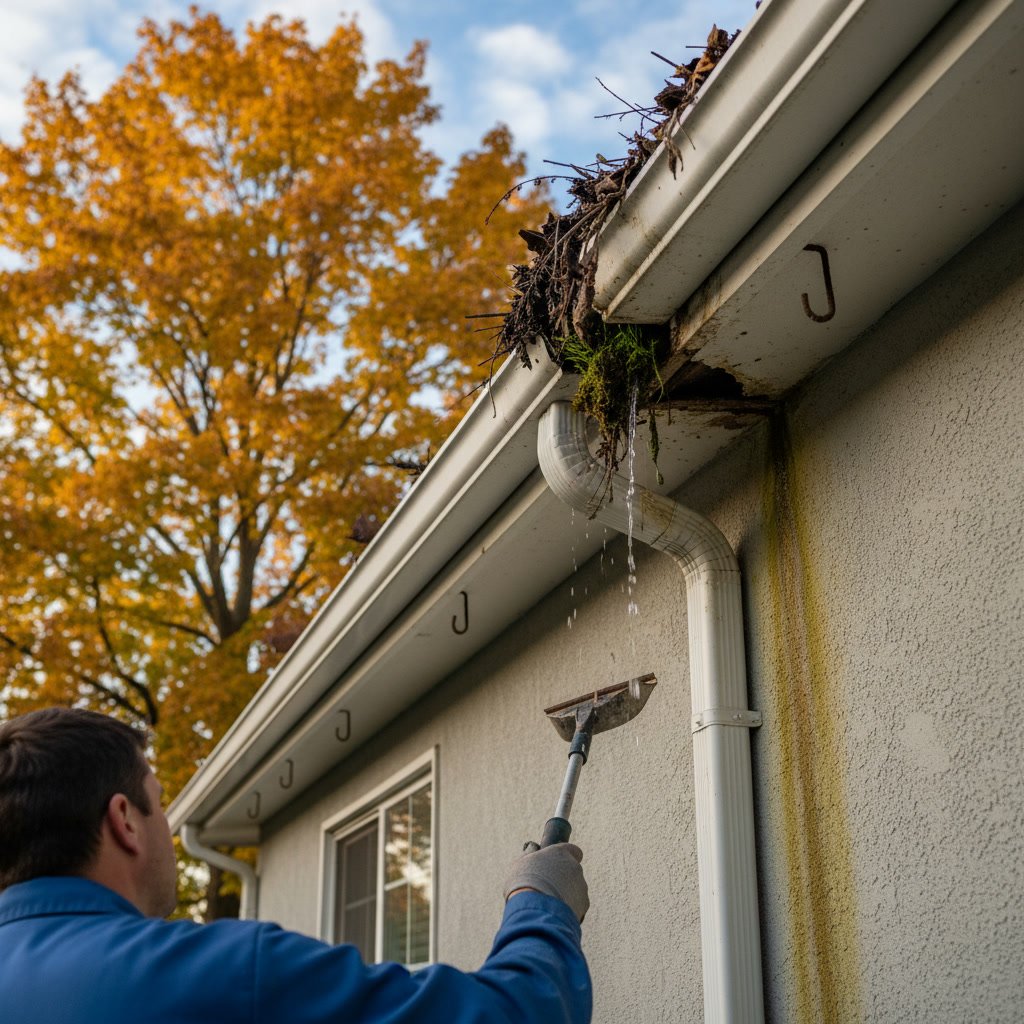
Gutters showing separation from the fascia, visible rust holes, or severe sagging indicate structural damage that cleaning cannot fix. These gutter damage signs point to worn brackets, corroded metal, or failed fasteners requiring repair or full replacement. While routine cleaning addresses clogs and debris, true damage compromises your home’s water management system and demands immediate professional assessment.
Understanding the difference between a dirty gutter and a damaged one saves thousands in water damage repairs. Many homeowners schedule cleanings only to discover their system has deteriorated past the point of simple maintenance.
Why Gutter Problems Often Look Like Simple Blockages
Overflowing water during rainstorms seems like an obvious clog. Most homeowners assume leaves and debris are the culprits. That assumption makes sense since gutters exist to channel water, and blockages are common.
But overflow can also signal pitch problems, separated sections, or warped channels that prevent proper water flow even when completely clean. A gutter sloped incorrectly by just one-quarter inch over ten feet will pool water regardless of debris levels.
The visible symptoms of damage and blockage overlap significantly. Both cause water spillover, both create staining on siding, and both allow moisture near your foundation. The key difference lies in whether removal of debris solves the problem or merely reveals the underlying structural failure.
Separation Between Gutters and Your Roofline
Gaps between the gutter and fascia board indicate failed mounting hardware. Healthy systems sit flush against the roofline with no daylight visible behind them. When you can slide fingers between the gutter and the house, the spikes or hangers have pulled loose.
This separation happens gradually as fasteners rust, wood rots, or repeated freeze-thaw cycles work mounting points loose. Old spike-and-ferrule systems are particularly vulnerable because they rely on a single penetration point every two to three feet.
Once separation begins, each rainstorm accelerates the damage. The weight of water pulls the gutter further away, creating larger gaps and more stress on remaining attachment points. Within one season, a small gap can become a completely detached section hanging by a corner.
Visible Cracks, Holes, or Rust Perforation
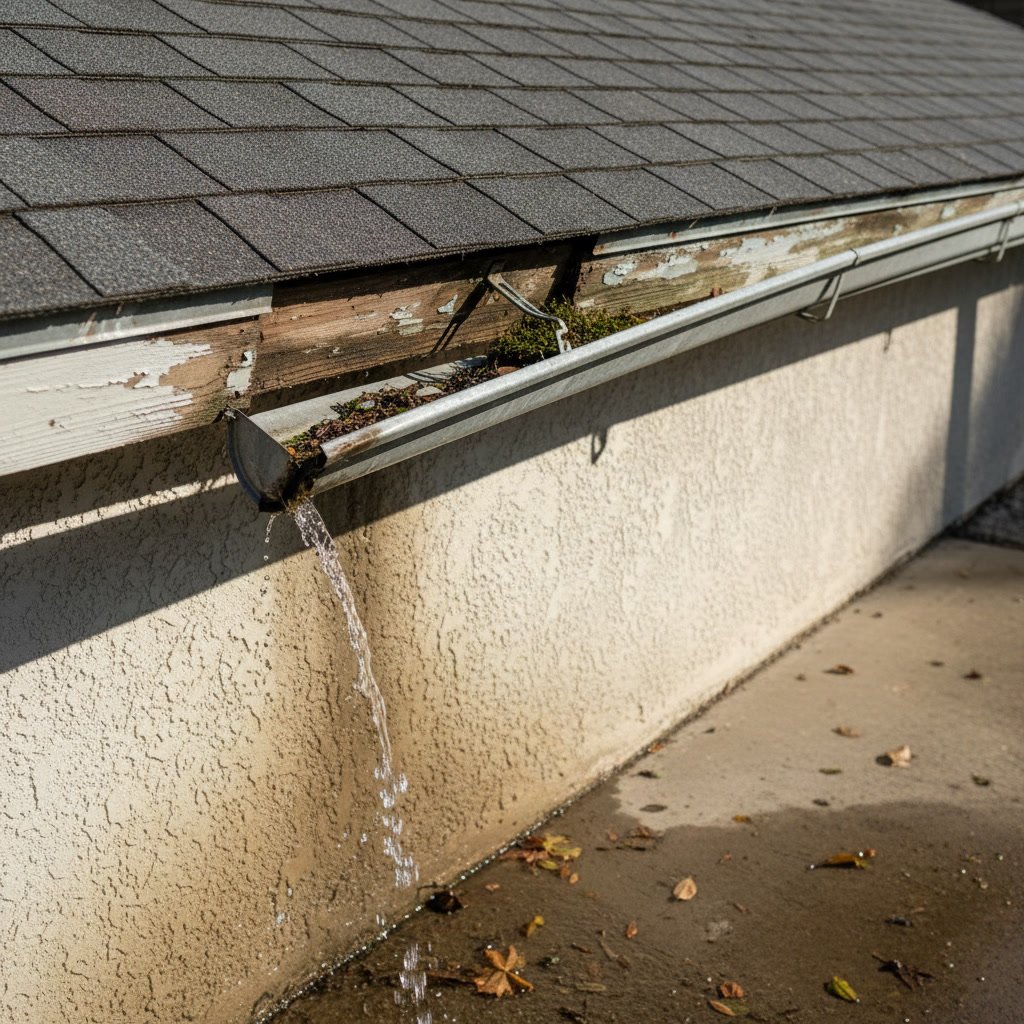
Small cracks near seams or corners will expand. Water finds every weakness, and freeze-thaw cycles turn hairline fractures into gaping splits. Aluminum gutters develop cracks from impact or stress. Steel gutters rust through, starting as surface oxidation and progressing to actual holes.
Rust holes smaller than a dime might seem patchable, but they indicate systemic corrosion. If one spot has rusted through, the entire thickness of metal in that section has thinned. Patching one hole while the surrounding material continues degrading buys only temporary relief.
Cracks longer than three inches or multiple rust perforations in a ten-foot section mean that length needs replacement. Sealants and patches work for emergency repairs but rarely last more than one season under Connecticut weather conditions.
Sagging Sections and Improper Pitch
Gutters should slope one-quarter inch per ten feet toward downspouts. You can check this with a level or simply by observing where water pools after rain. Standing water anywhere along the channel indicates incorrect pitch.
Sagging creates reverse slopes that trap water. The weight of trapped water then increases the sag, creating a self-reinforcing cycle. A gutter designed to handle flowing water cannot support standing water loads, especially when ice forms.
If you notice a visible belly or dip when viewing the gutter from ground level, the problem has progressed beyond minor adjustment. Professional gutter cleaning often reveals pitch issues hidden by debris, but correction requires rehinging or replacing entire sections.
Peeling Paint, Rot, or Water Stains on Your Home in Cromwell
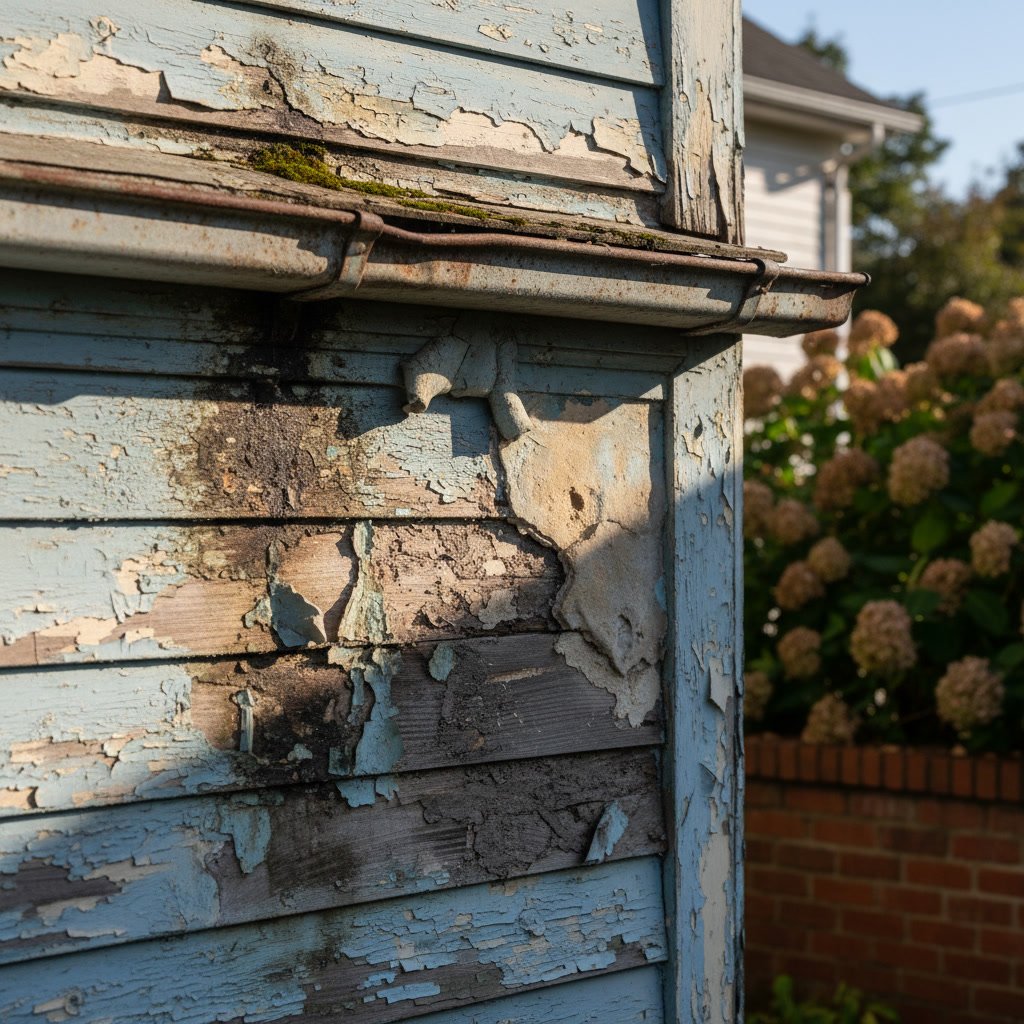
Orange or brown streaks running down siding below gutter lines show chronic overflow. Paint peeling on fascia boards or soffits indicates prolonged moisture exposure. Wood rot on trim or fascia means water has been escaping the gutter system long enough to saturate structural lumber.
These secondary damage signs often cost more to repair than the gutters themselves. Replacing rotted fascia boards requires removing gutters, cutting out damaged wood, installing new lumber, priming, painting, and reinstalling the water management system.
Stains on brick or stone below gutter lines indicate years of improper drainage. The minerals in overflowing water etch into masonry and rarely clean away completely. Addressing the gutter failure stops further damage but does not reverse existing staining without professional exterior cleaning services.
Foundation Cracks or Basement Water Issues
Gutters exist primarily to protect foundations. When they fail, water pours directly against basement walls and footer drains. A single downspout dumping 300 gallons during a moderate storm concentrates that volume in one spot.
Horizontal cracks in foundation walls, water seepage in basements, or settling around the perimeter often trace back to gutter failure. The damage occurs silently over years as soil erodes, hydrostatic pressure builds, and freeze-thaw cycles work against concrete.
Foundation repairs start at several thousand dollars. Gutter replacement costs a fraction of that amount. Ignoring gutter problems to avoid a modest expense frequently results in catastrophic costs down the line. For comprehensive property protection, combining proper drainage with regular residential house washing prevents many water-related issues.
Eroded Landscaping or Soil Trenches Below Roofline
Channels carved in mulch beds or exposed soil trenches directly under the roofline show exactly where water escapes. Healthy gutters deposit water at downspouts only. Water falling anywhere else along the roofline means the system has failed.
Splash erosion undermines foundation backfill and creates drainage paths toward the basement. Plants in these areas often show stress from either too much water or having their roots exposed by erosion.
If you can trace a clear line of erosion damage that matches your roofline, the gutters are not doing their job. This physical evidence is often easier to spot than looking up at the gutters themselves, especially on second-story sections.
Interior Water Damage in Attics or Along Ceilings
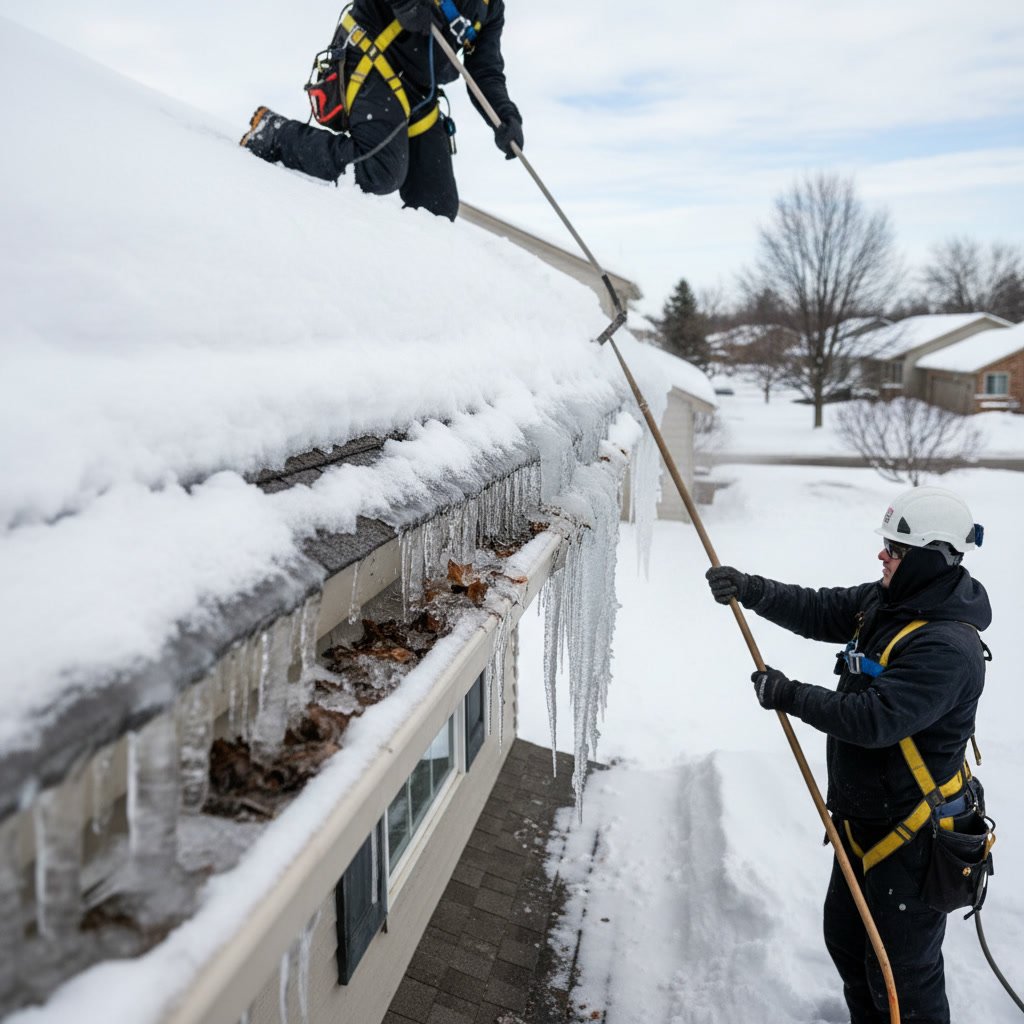
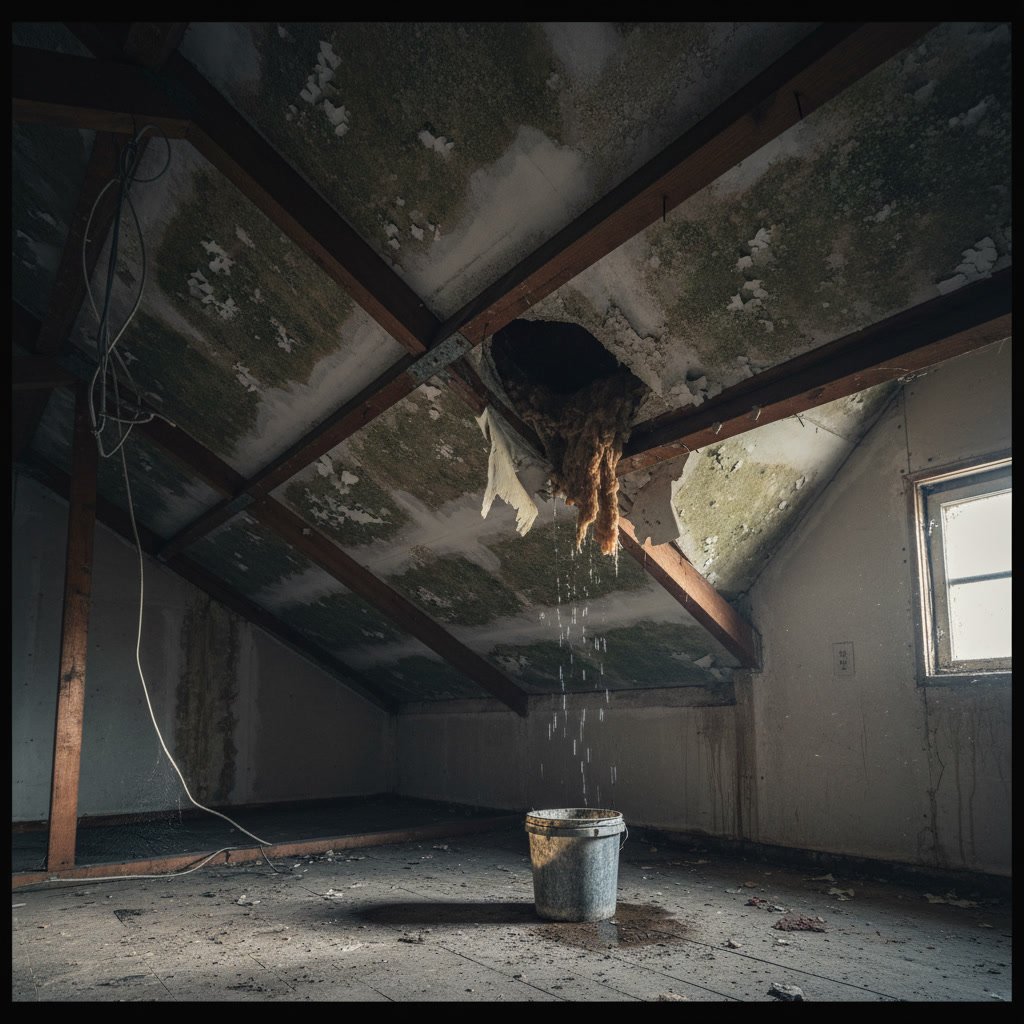
Gutter overflow that runs back under shingles appears as ceiling stains, attic moisture, or water tracking along rafters. This back-flow happens when gutters fill beyond capacity, when ice dams form, or when separated gutters dump water directly onto the roof edge.
The resulting damage looks identical to roof leaks, and many homeowners spend money on unnecessary roof repairs before discovering the real culprit. Water stains on interior ceilings near exterior walls, particularly after heavy rain, often point to gutter problems rather than roofing failure.
Attic inspections during or immediately after rainstorms reveal the source. Water coming from the roof edge rather than higher up the slope indicates gutter system failure. Many of the best roof cleaning methods for asphalt shingles include gutter inspection as part of comprehensive maintenance.
Five Critical Inspection Points for Homeowners
Checking your gutter system twice yearly catches problems early. Spring and fall inspections take 30 minutes and prevent thousands in damage.
First, walk the entire perimeter during moderate rain. Note any overflow points, water escaping at seams, or sections not draining. Active observation beats static inspection because problems show clearly under working conditions.
Second, examine all inside and outside corners closely. Seams fail first at corners where two sections meet. Look for separated joints, sealant gaps, or visible daylight through seams.
Third, check every downspout outlet and extension. Water must flow freely from the gutter into the downspout and discharge at least six feet from the foundation. Blocked or disconnected downspouts negate the entire system.
Fourth, inspect all mounting points from a ladder if safely possible. Loose brackets, pulled fasteners, or rotted fascia behind mounting hardware indicate imminent failure. Replace failed fasteners immediately before sections detach.
Fifth, look for rust stains, white crusty deposits, or green oxidation on the gutter exterior. These chemical signatures indicate water escaping through cracks too small to see but large enough to cause ongoing damage.
When Cleaning Will Not Solve Your Problem
Professional assessment determines whether your system needs service or replacement. Debris removal restores function to structurally sound gutters. But no amount of cleaning fixes separated seams, corroded metal, failed pitch, or damaged mounting systems.
The decision point comes down to simple math. If repair costs exceed 50 percent of replacement cost, new gutters make better financial sense. A system with multiple failure points, extensive rust, or significant separation typically crosses that threshold.
Temporary patches and sealants work for isolated damage on otherwise healthy systems. They fail when applied to gutters with systemic problems. Homeowners waste money on repeated cleaning and minor repairs when the underlying infrastructure has reached end of life.
Protecting Your Investment Before Small Issues Escalate
Gutter problems rarely improve on their own. Small cracks grow, minor separation worsens, and localized damage spreads. The cost and complexity of repairs increase exponentially once secondary damage begins affecting fascia, soffits, siding, or foundations.
Catching issues in the early stages keeps repairs manageable and prevents cascade failures. A loose bracket costs a few dollars to replace. The fascia rot it causes when ignored costs hundreds. The foundation damage from years of misdirected water costs thousands.
Regular inspection, prompt attention to emerging problems, and professional evaluation when you notice warning signs protect your home and your budget. Understanding what true damage looks like, versus simple maintenance needs, helps you make informed decisions about your property. Patriot Pressure Washing provides comprehensive gutter assessments that distinguish between cleaning needs and structural repairs, helping Connecticut homeowners address the right problem the first time.
If you have noticed any of these warning signs around your property, a professional inspection can determine whether your system needs service or replacement. Call +18606612407 to schedule an assessment and protect your home from costly water damage.