Professional power washing transforms concrete driveways, patios, and masonry surfaces by removing years of stains, mold, and grime. The power washing concrete process involves inspection, pre-treatment, high-pressure cleaning at 3000-4000 PSI, and post-treatment sealing when needed. Most residential concrete cleaning jobs take two to four hours depending on surface area and stain severity.
Why Concrete and Masonry Need Different Treatment Than Siding
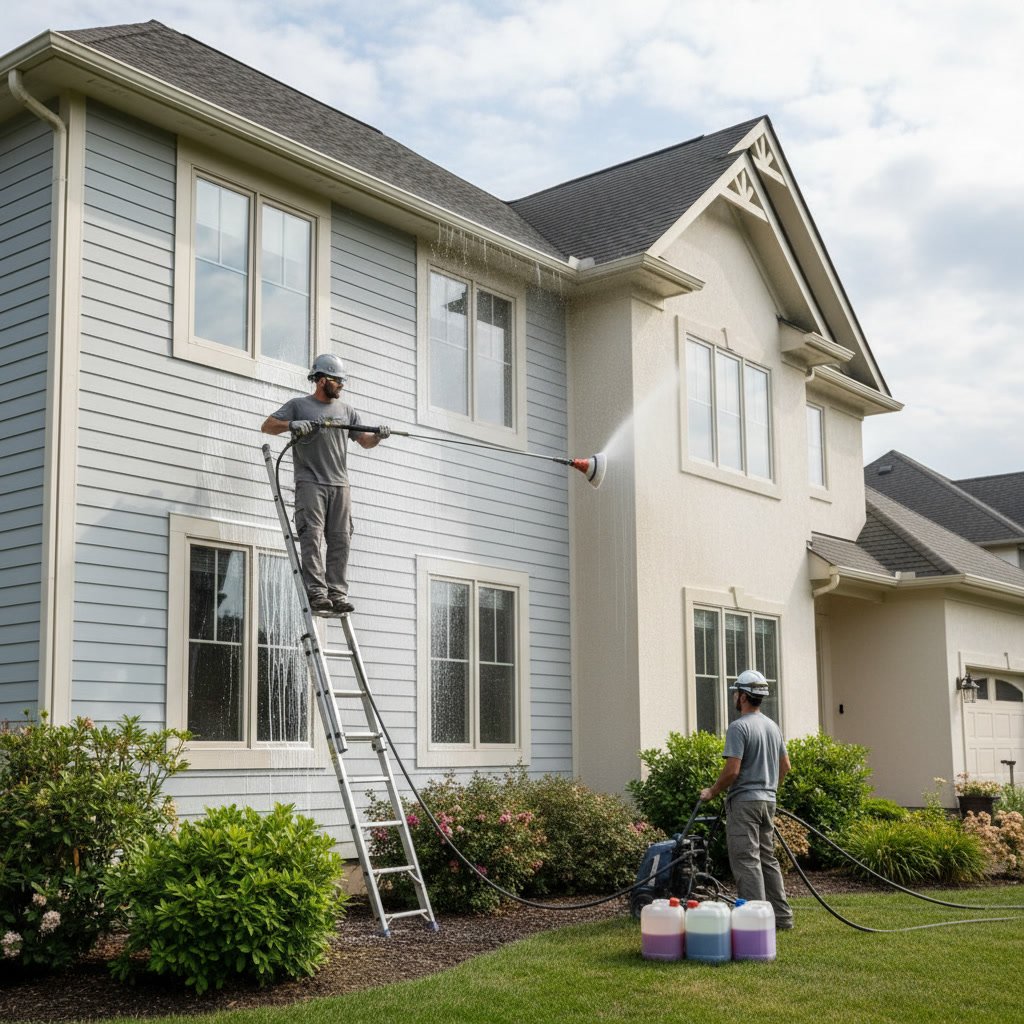
Concrete and masonry surfaces can handle significantly higher water pressure than vinyl siding or wood. While exterior cleaning services for homes typically use soft washing techniques at 300-500 PSI, concrete requires 3000 PSI or higher to penetrate porous surfaces and lift embedded stains. Brick, pavers, and concrete absorb oil, rust, algae, and tire marks deep into the material, making gentle cleaning methods ineffective.
The mineral composition of concrete also reacts differently to cleaning agents. Acid-based cleaners work well on efflorescence and rust stains but can damage painted surfaces or landscaping. Professional contractors select chemicals based on the specific stain type and surrounding environment to avoid collateral damage.
Pre-Service Inspection and Surface Assessment
Before any water touches your driveway or patio, a thorough inspection identifies problem areas and potential hazards. Technicians look for cracks wider than a quarter inch, spalling concrete, loose mortar in brick joints, and areas where high pressure could cause further damage. Noting these conditions upfront prevents disputes about pre-existing damage and allows for adjustments in pressure settings.
The inspection also maps out drainage patterns. Water needs somewhere to go during cleaning, and directing thousands of gallons toward your foundation or into landscaping beds creates new problems. Professionals plan water flow paths and may use portable berms or sandbags to redirect runoff away from vulnerable areas.
Surface porosity testing determines chemical dwell times. A water droplet test shows how quickly the concrete absorbs moisture. Highly porous surfaces need shorter pre-treatment times because chemicals penetrate faster, while dense, sealed concrete requires longer contact periods for effective stain breakdown.
Clearing and Protecting the Work Area in Cromwell
Furniture, planters, vehicles, and decorative items must be moved at least 10 feet from the cleaning zone. High-pressure water can dislodge objects, and overspray carries cleaning chemicals that damage paint, stain wood, or kill plants. Professional teams either move items themselves or provide clear instructions for homeowner preparation.
Delicate landscaping gets covered with plastic sheeting weighted down at the edges. Cleaning solutions formulated for concrete often contain sodium hypochlorite or sodium hydroxide, both harmful to grass and shrubs. Even plain water at high pressure can uproot mulch or erode soil around plant roots.
Windows and doors near the work zone are closed and sometimes taped if overspray risk is high. Outdoor electrical outlets receive waterproof covers, and GFCI circuits are tested to prevent electrical hazards during wet work.
Chemical Pre-Treatment and Dwell Time
Most concrete surfaces receive a chemical application before pressure washing begins. The type of pre-treatment depends on the dominant stain. Oil and grease require alkaline degreasers, rust stains need oxalic acid or similar rust removers, and organic growth responds to sodium hypochlorite solutions. Some surfaces need multiple treatments for different stain types.
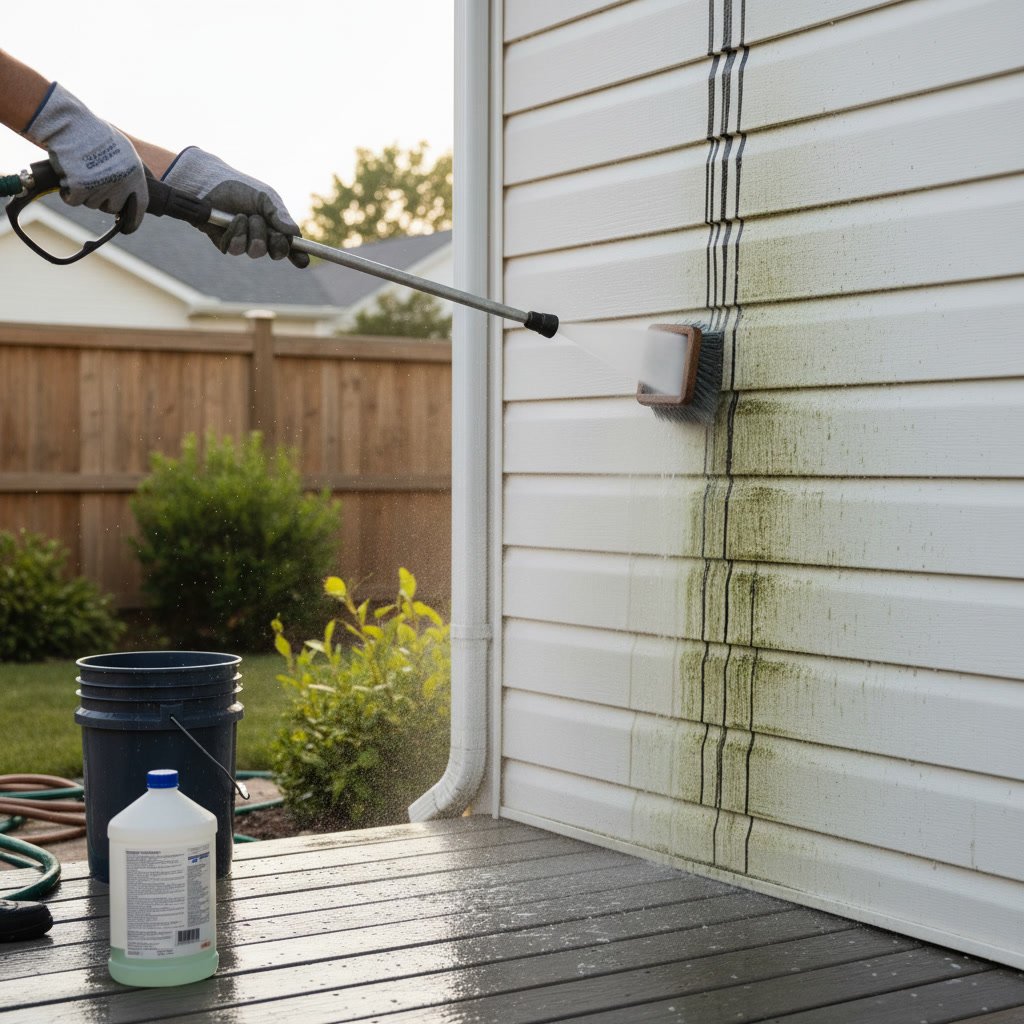
Application happens at low pressure, around 40-60 PSI, using a chemical injector or separate pump sprayer. The goal is even coverage without runoff. Technicians work in sections, applying cleaner to manageable areas they can complete before the chemical dries. Dried chemicals leave residue that creates new stains or requires extra rinsing.
Dwell time ranges from five to 20 minutes depending on chemical strength and stain severity. During this period, the cleaner breaks molecular bonds between the stain and the concrete surface. Rushing this step reduces cleaning effectiveness and forces technicians to make multiple passes, wasting time and water. Experienced contractors know exactly how long each product needs based on temperature, humidity, and surface condition.
High-Pressure Washing Technique and Equipment Settings
Once pre-treatment has done its work, the actual power washing service begins. Commercial-grade machines deliver 3000 to 4000 PSI through zero-degree, 15-degree, or 25-degree nozzles depending on the surface hardness and stain type. Zero-degree nozzles concentrate all force into a pinpoint stream that can etch concrete if held in one spot, so they are used sparingly for extreme stains like tar or dried paint.
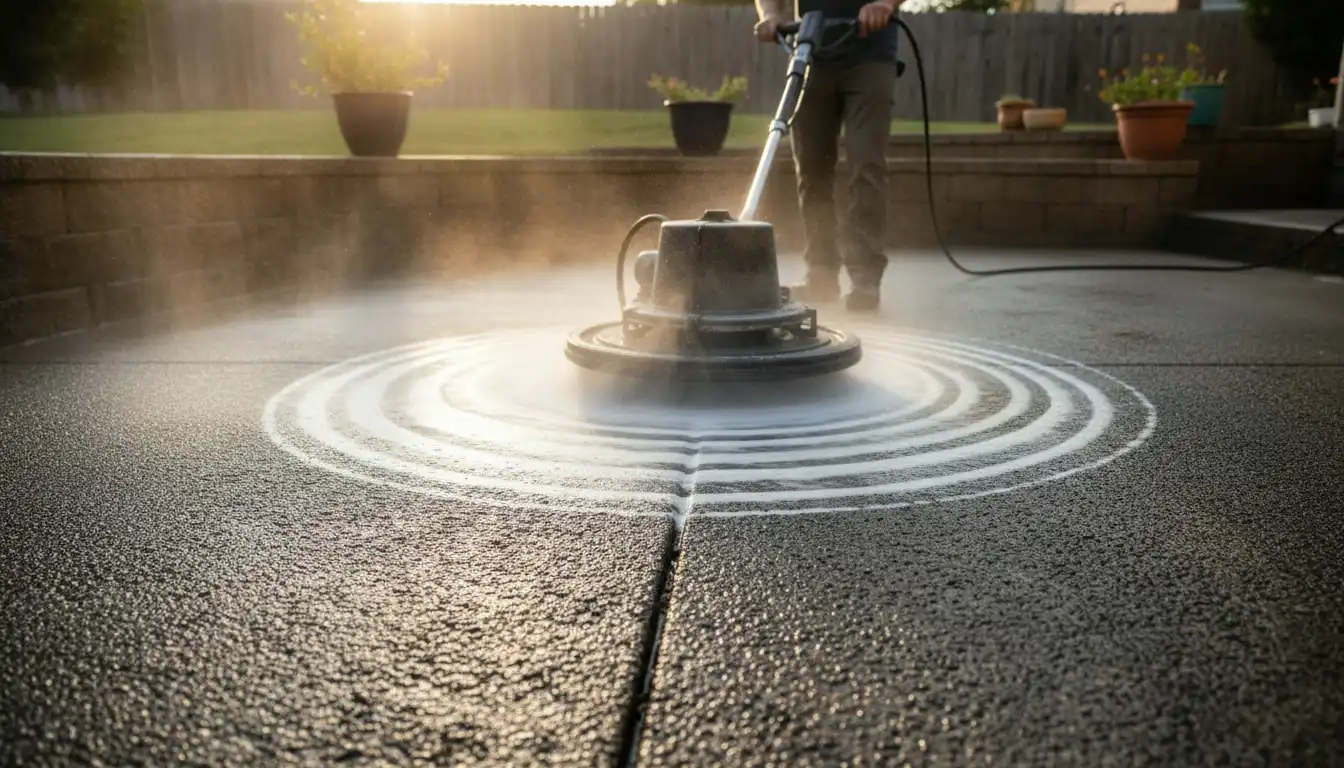
The most common approach uses a surface cleaner attachment, a rotating bar with multiple nozzles housed under a circular shroud. This tool cleans in uniform strips without leaving wand marks or zebra striping that happens when operators overlap passes inconsistently. Surface cleaners also contain overspray, reducing the risk of damage to nearby siding or windows.
Water temperature makes a significant difference in cleaning speed and effectiveness. Hot water units heat water to 180-200 degrees Fahrenheit, which melts grease and oil far better than cold water. The additional cost and equipment complexity mean not all contractors offer hot water washing, but for heavily soiled commercial concrete or restaurant pads, it becomes essential.
Technicians maintain a consistent distance of six to 12 inches from the surface and move at a steady pace. Too close or too slow, and the pressure etches the concrete. Too far or too fast, and stains remain. Walking speed of about one foot per second typically produces optimal results on standard residential driveways.
Rinsing and Neutralization
After the primary cleaning pass, surfaces receive a thorough rinse to remove loosened debris and chemical residue. Remaining alkaline cleaners can leave a chalky film that attracts new dirt quickly, while acidic cleaners continue etching the surface if not fully neutralized. The rinse uses lower pressure, around 2000-2500 PSI, to avoid driving dirty water back into the porous concrete.
Some stain types or cleaning agents require a neutralizing rinse with a pH-balanced solution. After using acid on rust stains, for example, technicians apply a mild alkaline rinse to bring the surface back to neutral pH. This prevents long-term damage and prepares the concrete for optional sealing.
Proper drainage management during rinsing prevents pooling and water damage. Large volumes of dirty water need to flow to appropriate drainage systems, not into storm drains that lead directly to waterways. Professional services capture and filter runoff when required by local regulations or when working with petroleum-contaminated surfaces.
Post-Cleaning Inspection and Touch-Up
Once the surface dries enough to assess results, usually 30 to 60 minutes after rinsing, technicians walk the entire area looking for missed spots or stubborn stains. Certain stains, particularly rust from metal furniture or deep oil penetration, may require a second treatment cycle. Rather than rewashing the entire surface, professionals spot-treat these areas with targeted chemical applications and focused pressure washing.
Joint lines between pavers or expansion cuts in concrete driveways often trap compacted dirt that resists the first pass. A detail wand with a rotating turbo nozzle cleans these narrow spaces without damaging edges. This attention to detail separates thorough professional work from rushed jobs that look clean from a distance but reveal dirt lines up close.
Any damaged areas noted during the pre-inspection are rechecked to ensure cleaning did not worsen existing problems. Photographs taken before and after protect both contractor and homeowner by documenting the surface condition throughout the process.
Optional Sealing and Protection Application
Sealing concrete after power washing extends the time between cleanings and protects against future staining. Sealers come in two main types: penetrating sealers that soak into the concrete and create a chemical barrier within the surface, and topical sealers that form a protective film on top. Penetrating sealers maintain the natural look and texture of concrete while repelling water and oil. Topical sealers provide a glossy or matte finish and offer stronger stain resistance but can become slippery when wet.
Application timing is critical. Concrete must be completely dry, which can take 24 to 48 hours depending on weather conditions, porosity, and humidity. Applying sealer to damp concrete traps moisture that later causes hazing, bubbling, or delamination. Temperature also matters; most sealers require application between 50 and 90 degrees Fahrenheit for proper curing.
Not every concrete surface benefits from sealing. Heavily textured concrete or surfaces in constant shade where moisture does not evaporate well may develop mold under a sealer. A professional assessment determines whether sealing makes sense for your specific situation, climate, and usage patterns.
Comparison of Surface Cleaning Methods
Understanding the differences between power washing, pressure washing, and soft washing helps you know what your concrete actually needs. Power washing uses heated water at high pressure, making it ideal for oil-stained garage floors and commercial lots. Standard pressure washing uses cold water at high PSI, perfectly suited for residential driveways and patios. Soft washing applies low-pressure chemical cleaning, appropriate for deck cleaning or delicate masonry with deteriorating mortar.
Surface cleaners versus wand work represents another key distinction. Surface cleaners provide uniform results and work three to five times faster than wand cleaning on flat, open areas. Wands offer precision for edges, stairs, and detail work where the surface cleaner cannot reach. Professional services use both tools strategically rather than relying on a single approach.
Chemical cleaning versus water-only washing shows the clearest performance difference. Plain water removes surface dirt and loose debris but cannot break down molecular bonds in oil stains, rust, or biological growth. Appropriate chemical pre-treatment reduces required pressure, minimizes surface wear, and delivers results that last months longer than water-only cleaning.
Drying Time and Surface Readiness
Concrete surfaces remain damp for one to three days after power washing depending on weather conditions, surface porosity, and shade coverage. Direct sunlight and low humidity speed drying, while cool, overcast conditions or heavy shade extend drying times. You can walk on concrete within a few hours once standing water disappears, but the surface continues releasing moisture from within the porous material.
Vehicle traffic should wait until complete drying occurs. Driving on damp concrete can leave new tire marks, especially if any cleaning residue remains. The fresh, clean surface also shows every new stain more dramatically, so waiting ensures you do not immediately mar the results.
If you plan to seal, stain, or paint the concrete, extended drying becomes even more important. Moisture testing with a plastic sheet taped to the surface overnight reveals whether the concrete still releases vapor. Condensation under the plastic means the surface needs more drying time before applying any coating.
Your Concrete Deserves Professional Care
The difference between amateur and professional concrete cleaning shows up in preparation, chemical selection, pressure calibration, and attention to detail. Rushed work leaves streaks, misses embedded stains, and risks surface damage from improper pressure or nozzle selection. Thorough work from experienced technicians restores concrete to near-original appearance and extends the interval before the next cleaning becomes necessary.
Regular maintenance keeps concrete looking better longer and prevents permanent staining that no amount of pressure can remove. Annual cleaning for high-traffic areas like driveways and every two years for patios and walkways maintains curb appeal and protects your investment in hardscaping.
Patriot Pressure Washing brings military precision and attention to detail to every concrete and masonry cleaning project. Whether you need your driveway refreshed, your patio restored, or commercial concrete maintained, our team uses the right equipment, proper techniques, and appropriate chemicals for lasting results. Reach out to Patriot Pressure Washing at (860) 661-2407 to schedule your concrete cleaning service and see the difference professional care makes.