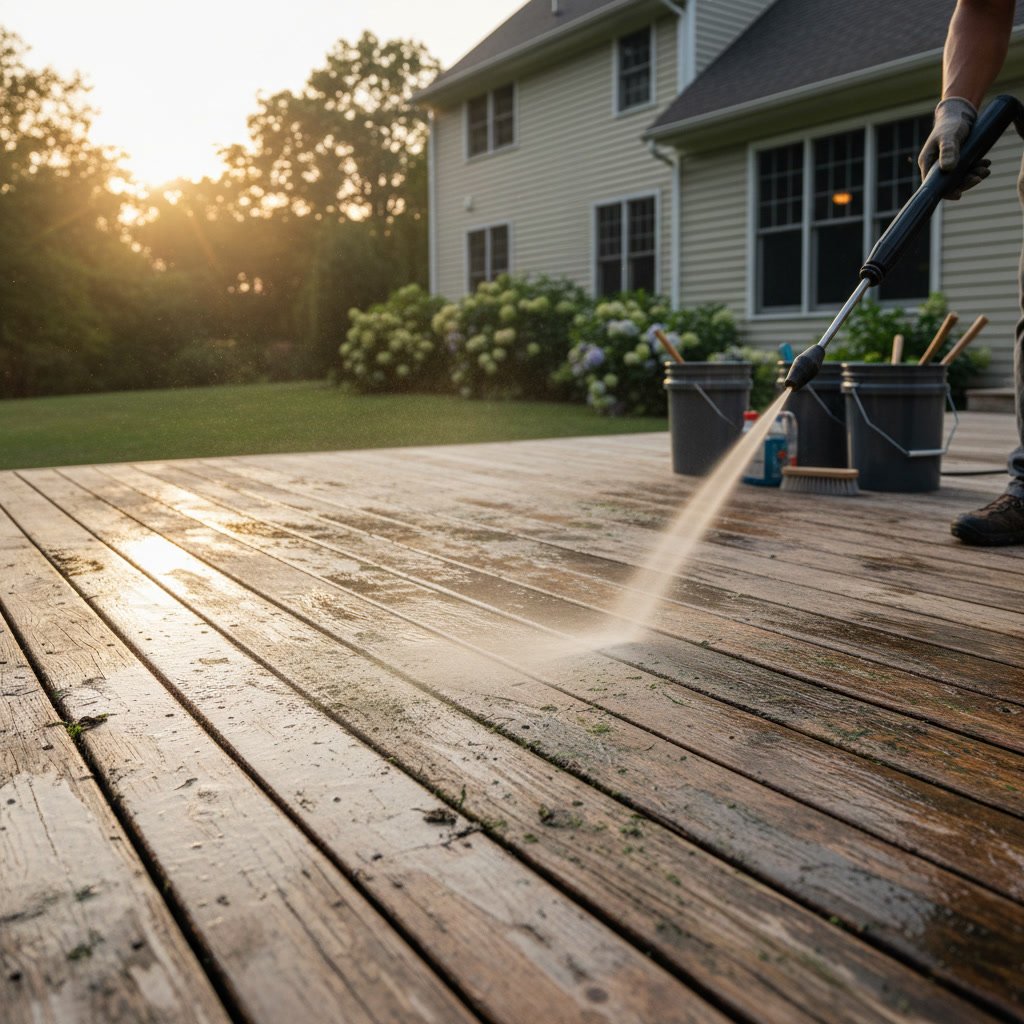
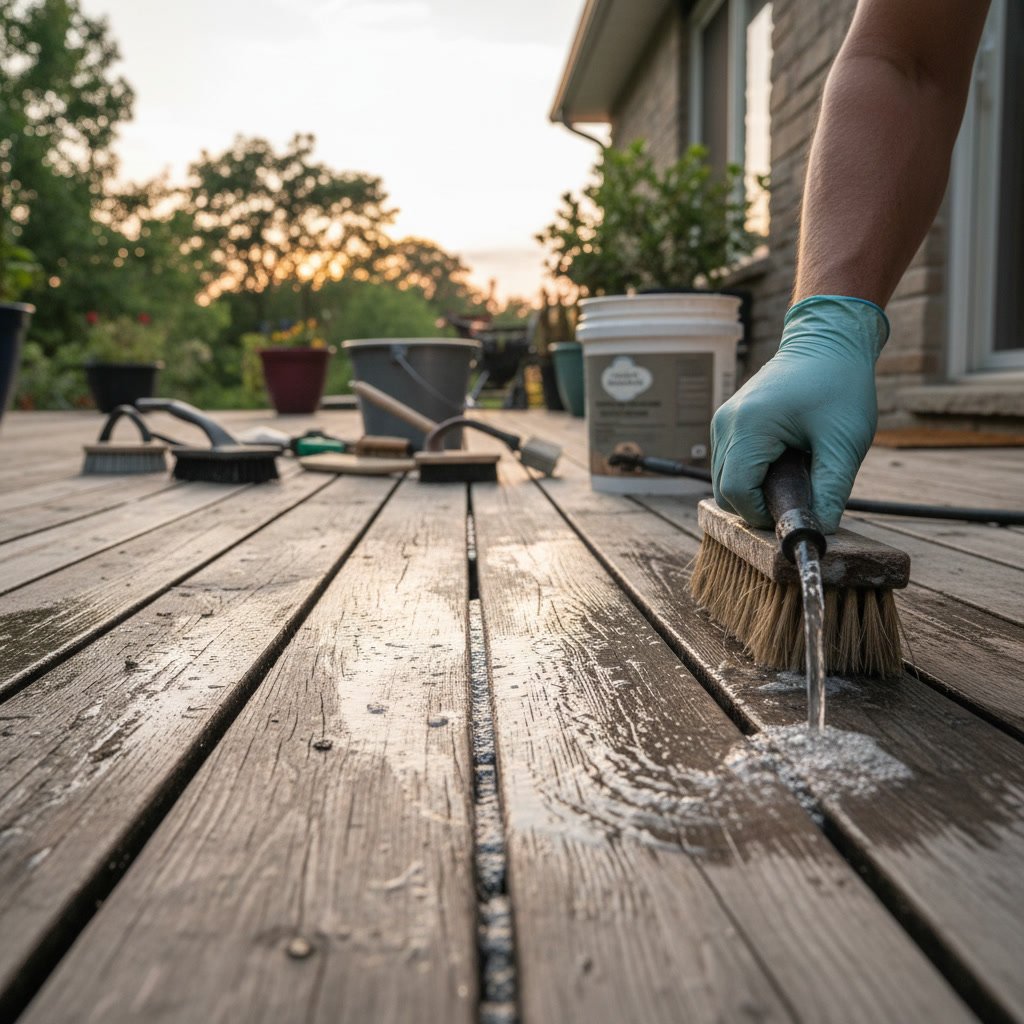
Professional deck cleaning methods focus on removing dirt, algae, and mold while protecting the wood’s structural integrity. The right combination of water pressure, cleaning angle, and chemical treatment prevents surface splintering, fiber lifting, and premature aging. Proper technique can extend your deck’s lifespan by 5 to 10 years compared to aggressive cleaning that damages the wood surface.
Why Traditional Pressure Washing Can Damage Wood Decks
High-pressure water streams can easily exceed the tolerance threshold of most deck woods. Cedar and pine, the most common decking materials in Connecticut, begin to show fiber damage at pressures above 1,200 PSI when applied at close range. The water jet acts like thousands of tiny chisels, lifting and separating wood fibers from the surface.
Many homeowners rent equipment without understanding the relationship between pressure, nozzle distance, and spray angle. A zero-degree nozzle held six inches from the surface delivers concentrated force that cuts into wood like a knife. Even treated lumber suffers permanent scarring when cleaned improperly, creating rough patches that splinter easily and trap moisture.
Understanding Wood Grain Direction and Water Flow
Wood grain direction determines how water penetrates and affects the surface during cleaning. Moving against the grain forces water under loose fibers, lifting them away from the board surface. This creates the fuzzy, raised texture that leads to splinters and accelerated weathering.
Professional cleaners always work parallel to the grain, allowing water to flow along the natural fiber channels rather than cutting across them. This technique removes surface contaminants while keeping the wood structure intact. The difference becomes obvious within weeks as properly cleaned decks maintain their smooth finish while improperly cleaned surfaces continue to deteriorate.
The Soft Wash Approach for Delicate Wood Surfaces
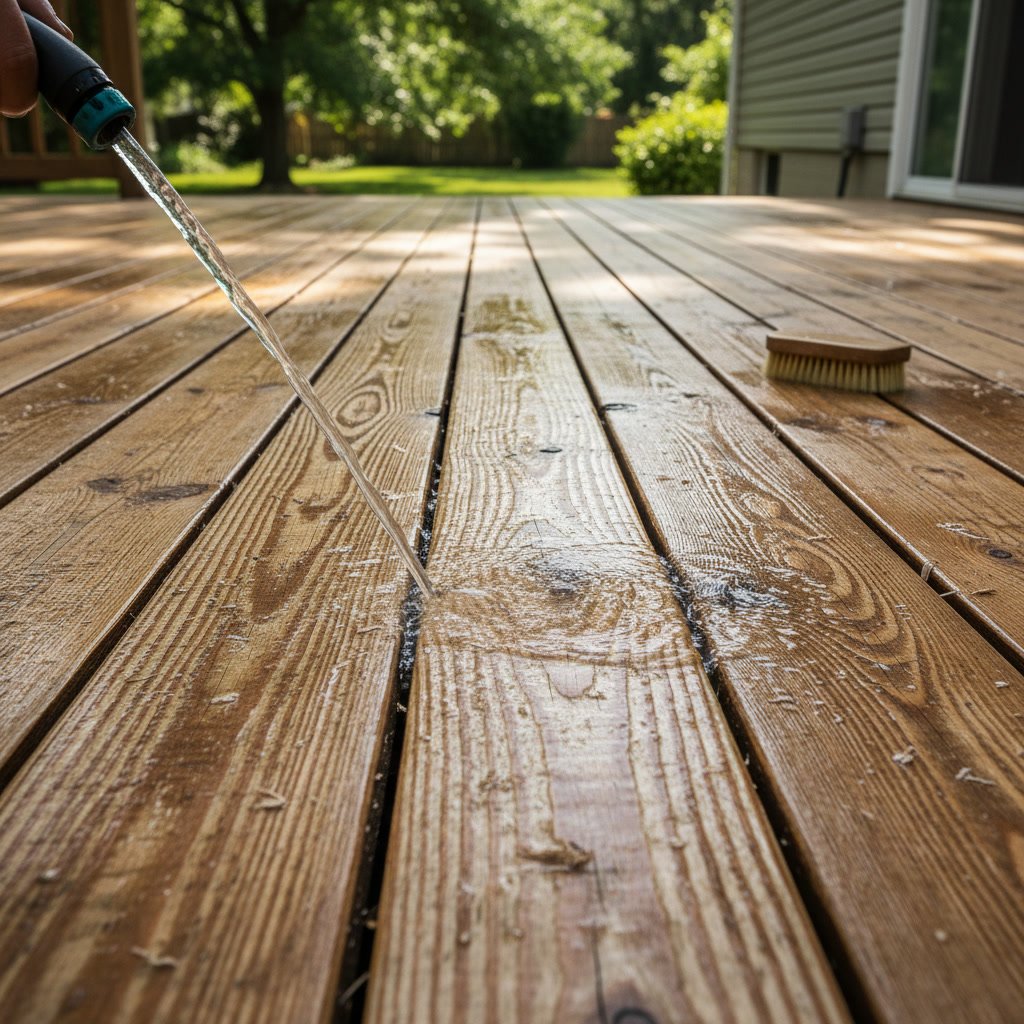
Soft washing uses chemical cleaning agents at low pressure to dissolve organic growth rather than blasting it away with force. This method applies biodegradable solutions at pressures below 500 PSI, roughly equivalent to a garden hose with a spray nozzle. The chemicals do the work while the water simply rinses away the loosened debris.
For weathered or older decks, soft washing prevents the fiber damage that occurs when high pressure hits compromised wood. The technique works particularly well on vertical surfaces like deck railings and balusters where water runoff naturally assists the cleaning process. Understanding what soft washing is and when to use it helps homeowners make informed decisions about their deck maintenance approach.
Optimal Pressure Settings for Different Wood Types
Pressure requirements vary significantly based on wood species, age, and condition. Fresh pressure-treated lumber tolerates 800 to 1,200 PSI when properly applied. Cedar and redwood, being softer woods, require gentler treatment at 500 to 800 PSI. Composite decking needs even lower pressure, typically 500 PSI or less, to avoid surface etching.
Aged wood that shows weathering requires the lowest pressure settings regardless of species. Five-year-old decking typically needs 30% less pressure than new wood to achieve the same cleaning results without damage. The surface has already begun to soften through UV exposure and moisture cycling, making it more vulnerable to fiber lifting.
Chemical Pre-Treatment and Dwell Time Requirements
Pre-treating deck surfaces with appropriate cleaning solutions reduces the mechanical pressure needed for effective cleaning. Oxygen-based cleaners break down organic stains and mildew over 10 to 15 minutes, allowing them to be rinsed away with minimal water force. Sodium hypochlorite solutions work faster but require careful dilution to prevent wood bleaching.
Dwell time matters as much as chemical selection. Rushing the process by increasing water pressure to compensate for insufficient dwell time defeats the purpose of chemical pre-treatment. Professional deck cleaning schedules build in adequate time for chemicals to work before any water touches the surface.
Nozzle Selection and Spray Pattern Control
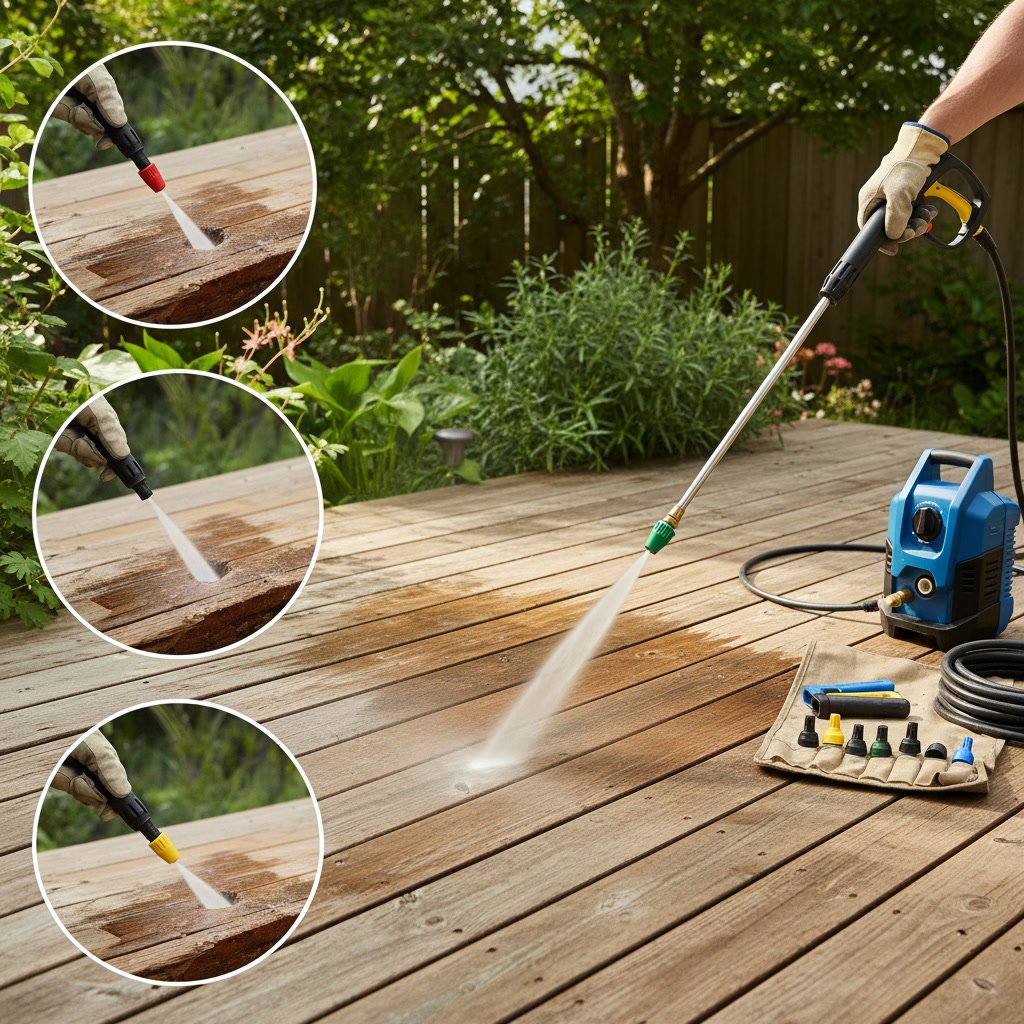
The spray nozzle determines how pressure distributes across the wood surface. A 40-degree fan tip spreads force over a wider area, reducing concentrated impact on any single point. This prevents the gouging and etching that occurs with narrow spray patterns. The wider pattern also improves cleaning efficiency by covering more surface area per pass.
Surface cleaning attachments with rotating nozzles provide the most consistent results. These tools maintain a fixed distance from the deck while distributing pressure evenly through spinning jets. The enclosed design prevents overspray and controls water direction, making it nearly impossible to accidentally damage the wood through improper technique.
Step-by-Step Process for Safe Deck Cleaning in Cromwell
Start by removing all furniture, planters, and debris from the deck surface. Sweep thoroughly to eliminate loose dirt that could scratch the wood when mixed with water pressure. Cover nearby plants and landscaping with plastic sheeting to protect them from cleaning solution runoff.
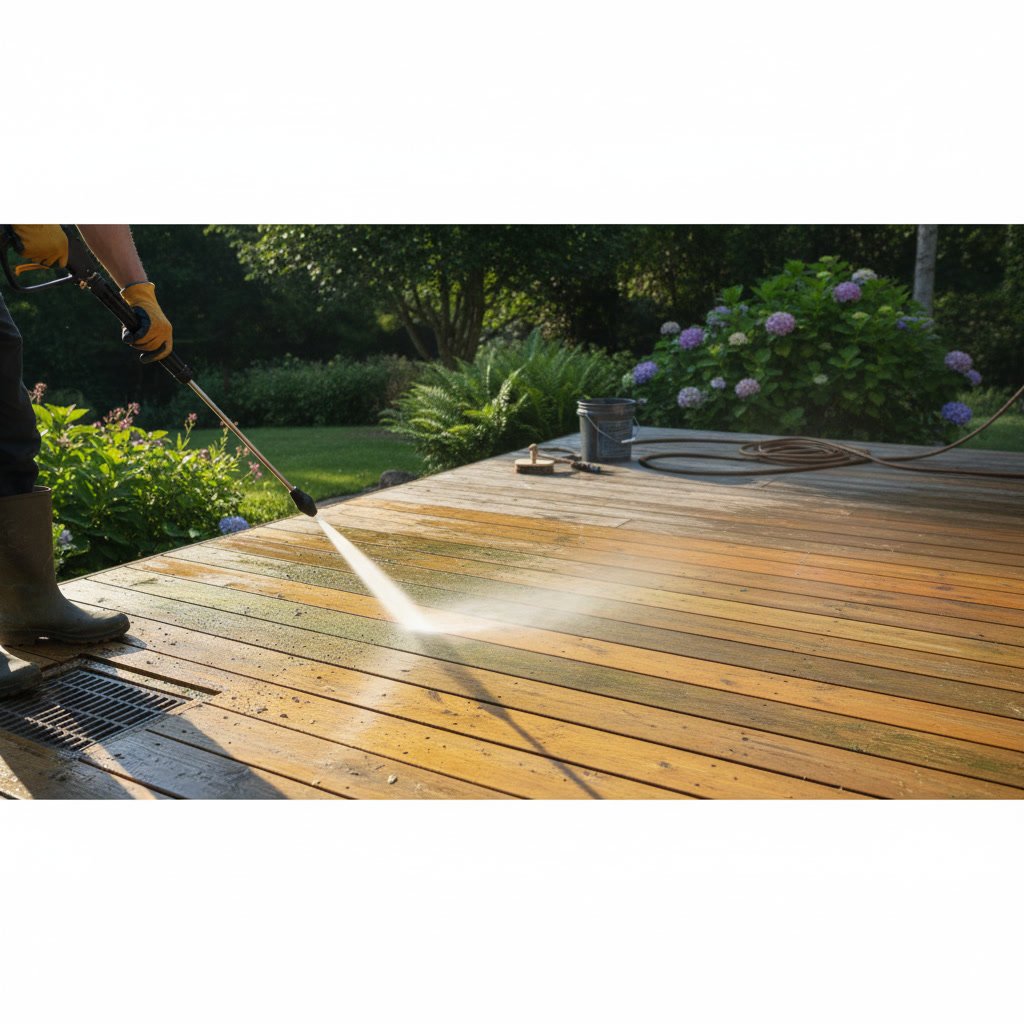
Apply your chosen cleaning solution using a pump sprayer or downstream injector, working in sections small enough to complete before the solution dries. Allow the recommended dwell time, keeping the surface wet by misting with plain water if needed. Rinse using a fan nozzle held 12 to 16 inches from the surface, moving steadily in the direction of the wood grain.
Work from the house outward, rinsing each board completely before moving to the next. Overlap your passes by several inches to avoid visible lines where cleaning patterns meet. For homeowners throughout Connecticut, professional services ensure these steps are followed precisely. Patriot Pressure Washing serves Cromwell and surrounding communities with trained technicians who understand local wood types and weathering patterns.
Post-Cleaning Wood Fiber Management
Even perfect cleaning technique raises some wood fibers, particularly on decks that haven’t been cleaned in several years. Allow the deck to dry completely for 48 to 72 hours after cleaning. This drying period lets raised fibers stiffen, making them easier to address without damaging sound wood underneath.
Light sanding with 80-grit sandpaper on a pole sander smooths raised fibers without removing significant material. Sand in the direction of the grain using gentle pressure. This step takes 30 to 45 minutes for an average deck but makes the difference between a professional finish and a rough surface that catches clothing and bare feet.
Timing Your Deck Cleaning for Best Results
Temperature and humidity affect both cleaning effectiveness and wood response. Schedule deck cleaning when temperatures range between 50 and 80 degrees Fahrenheit. Higher temperatures cause cleaning solutions to evaporate before they can work, while lower temperatures slow chemical reactions and extend drying time.
Avoid cleaning in direct sunlight, which dries surfaces too quickly and can cause uneven results. Early morning or late afternoon provides ideal conditions with lower temperatures and reduced sun exposure. Planning exterior cleaning services during spring or fall typically offers the best weather windows for deck maintenance.
When to Choose Professional Deck Cleaning Services
Complex deck designs with multiple levels, intricate railings, or attached structures benefit from professional expertise. Equipment rental costs often approach professional service prices when you factor in cleaning solutions, safety gear, and time investment. Professionals bring calibrated equipment, appropriate insurance coverage, and experience recognizing potential problems before they become visible damage.
Older decks showing signs of previous damage require assessment skills that come from cleaning hundreds of similar surfaces. A trained eye can identify areas needing repair before cleaning, preventing water intrusion into compromised wood that accelerates rot. This diagnostic capability alone justifies professional service for valuable deck structures.
Protecting Your Investment Through Proper Maintenance
Understanding safe cleaning techniques protects one of your home’s most valuable outdoor features. The difference between aggressive pressure washing and controlled cleaning methods determines whether your deck lasts 15 years or 30. Proper technique removes harmful contaminants while preserving the wood structure that gives your deck its strength and beauty.
Regular maintenance using appropriate methods prevents the deep cleaning challenges that come from years of neglect. Annual or biannual cleaning keeps organic growth manageable and eliminates the need for aggressive techniques that risk wood damage. Combined with proper sealing and staining, correct cleaning forms the foundation of comprehensive deck care.
Patriot Pressure Washing brings military precision and attention to detail to every deck cleaning project in Manchester and throughout the Hartford area. Our approach balances effectiveness with wood preservation, ensuring your deck looks great without compromising its structural integrity. Whether you need routine maintenance or restoration of a neglected surface, our team has the equipment and expertise to deliver results that last. Contact us at +18606612407 to schedule your deck cleaning and experience the difference that proper technique makes.