Your deck boards are soft to the touch. Dark stains spread across once-beautiful wood. You notice loose nails and splintering planks where your family gathers each summer. These are the warning signs of rot, and they signal a problem that costs Connecticut homeowners thousands in repairs every year. The good news is that deck rotting prevention starts with understanding what causes the damage in the first place.
Connecticut’s humid summers and freeze-thaw winters create the perfect environment for wood decay. When you combine moisture retention with organic debris, your deck becomes a breeding ground for the fungi and bacteria that destroy wood fiber. Professional cleaning removes these threats before they compromise your deck’s structural integrity.
The Science Behind Wood Rot on Your Deck
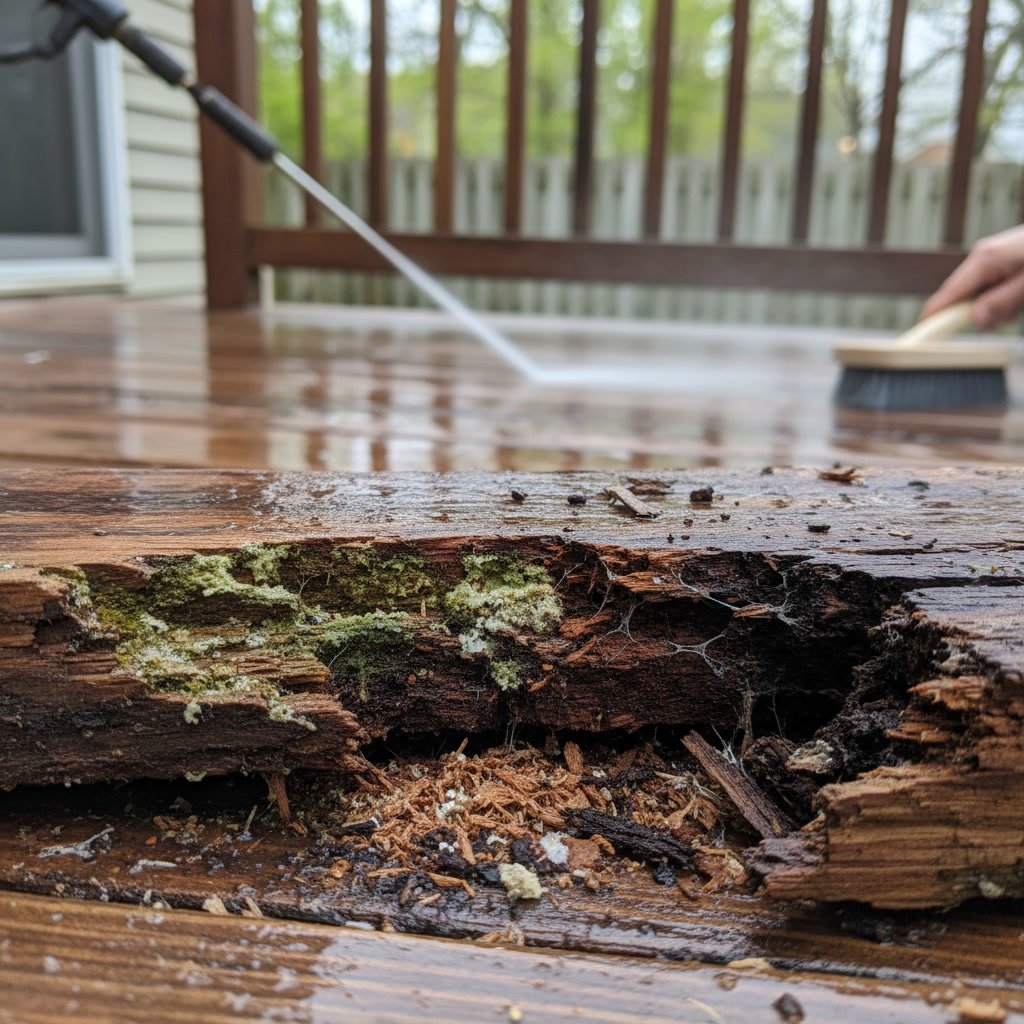
Wood rot is not just cosmetic damage. It’s a biological process where fungi digest the cellulose and lignin that give wood its strength. These organisms need four things to thrive: oxygen, moisture, moderate temperatures, and a food source. Your deck provides all four.
When moisture content in wood rises above 20 percent, rot fungi activate. In Cromwell, high humidity from nearby waterways and seasonal rain keeps deck wood damp for extended periods. Add fallen leaves, pollen, and dirt that trap moisture against the boards, and you have ideal conditions for decay.
Two types of rot attack outdoor wood. Brown rot breaks down cellulose and leaves wood dry and crumbly. White rot consumes lignin and creates soft, spongy areas. Both types weaken structural members and spread quickly once established.
Temperature fluctuations accelerate the process. When water enters cracks and expands during freezing, it creates larger gaps for more moisture penetration. The cycle repeats each winter, allowing rot fungi to penetrate deeper into the wood grain.
Common Causes of Deck Rot in Connecticut Homes
Most deck rot stems from preventable moisture problems. Understanding these causes helps you protect your investment before damage starts.
Poor Drainage and Standing Water
Water pooling on your deck surface is the number one culprit. Flat boards without proper slope trap moisture instead of shedding it. The water sits in contact with wood for hours or days, giving fungi time to establish colonies.
Clogged gaps between deck boards also trap water and debris. When leaves and dirt fill these spaces, they act like sponges that keep wood constantly wet. This problem worsens near downspouts and areas where roof runoff concentrates.
Organic Debris Buildup
Leaves, pine needles, pollen, and algae do more than look ugly. These materials hold moisture against wood surfaces and provide food for decay organisms. A layer of wet leaves sitting on your deck for weeks creates the exact conditions rot fungi prefer.
Mold and mildew grow on this organic matter first, then penetrate the wood underneath. What starts as surface discoloration becomes structural damage within months if left untreated.
Neglected Protective Coatings
Sealers and stains protect wood by repelling water. When these coatings wear away, bare wood absorbs moisture like a sponge. Most deck sealers last only two to three years in Connecticut’s climate before reapplication is needed.
You cannot effectively seal dirty wood. Applying fresh coating over grime and mildew traps moisture underneath, actually accelerating rot rather than preventing it. This is why proper deck cleaning must happen before any sealing work.
Direct Soil Contact
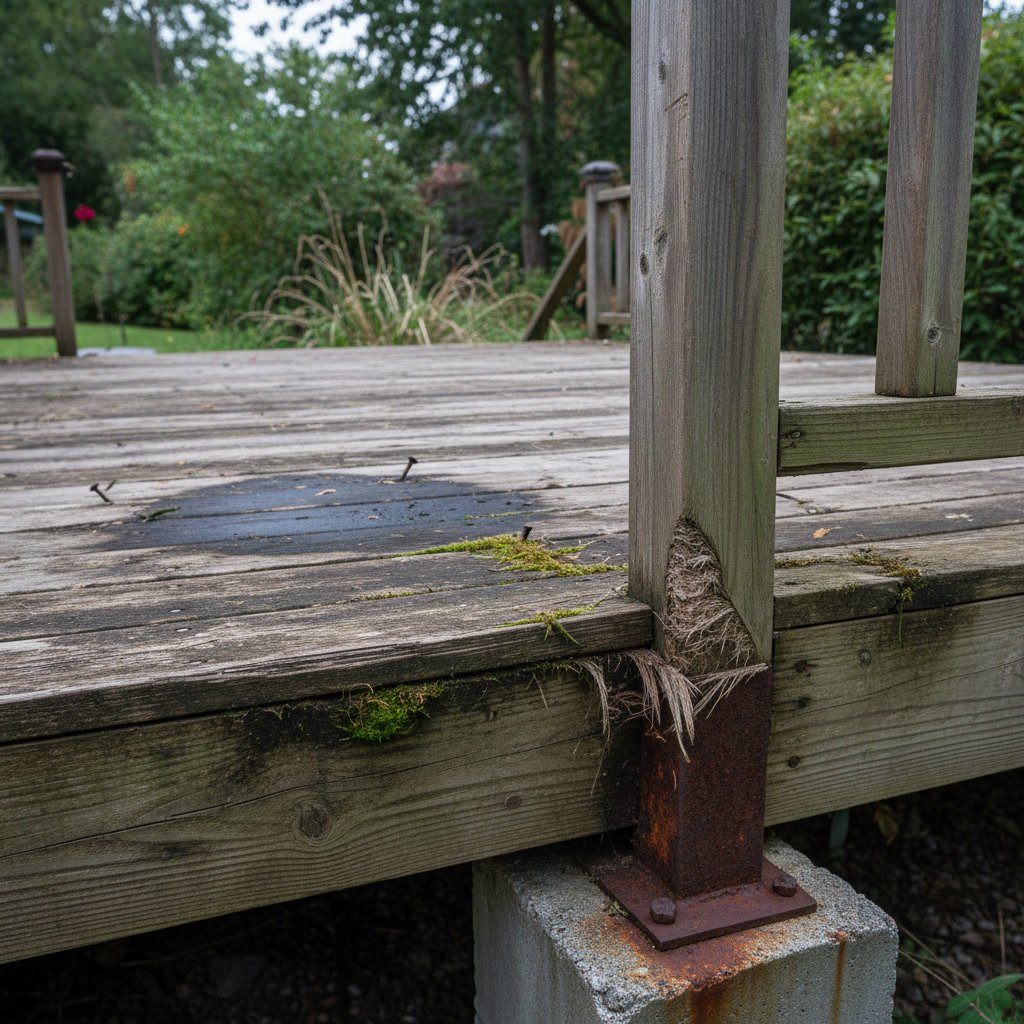
Deck posts and joists touching soil or buried in concrete draw moisture through capillary action. Ground moisture wicks up into the wood, keeping it perpetually damp above the safe threshold. This is especially common in older decks built before modern building codes required proper separation.
How Professional Cleaning Stops Rot Before It Starts
Regular professional cleaning is the most effective form of deck rotting prevention. It addresses the root causes of decay by removing moisture sources and organic contaminants that support fungal growth.
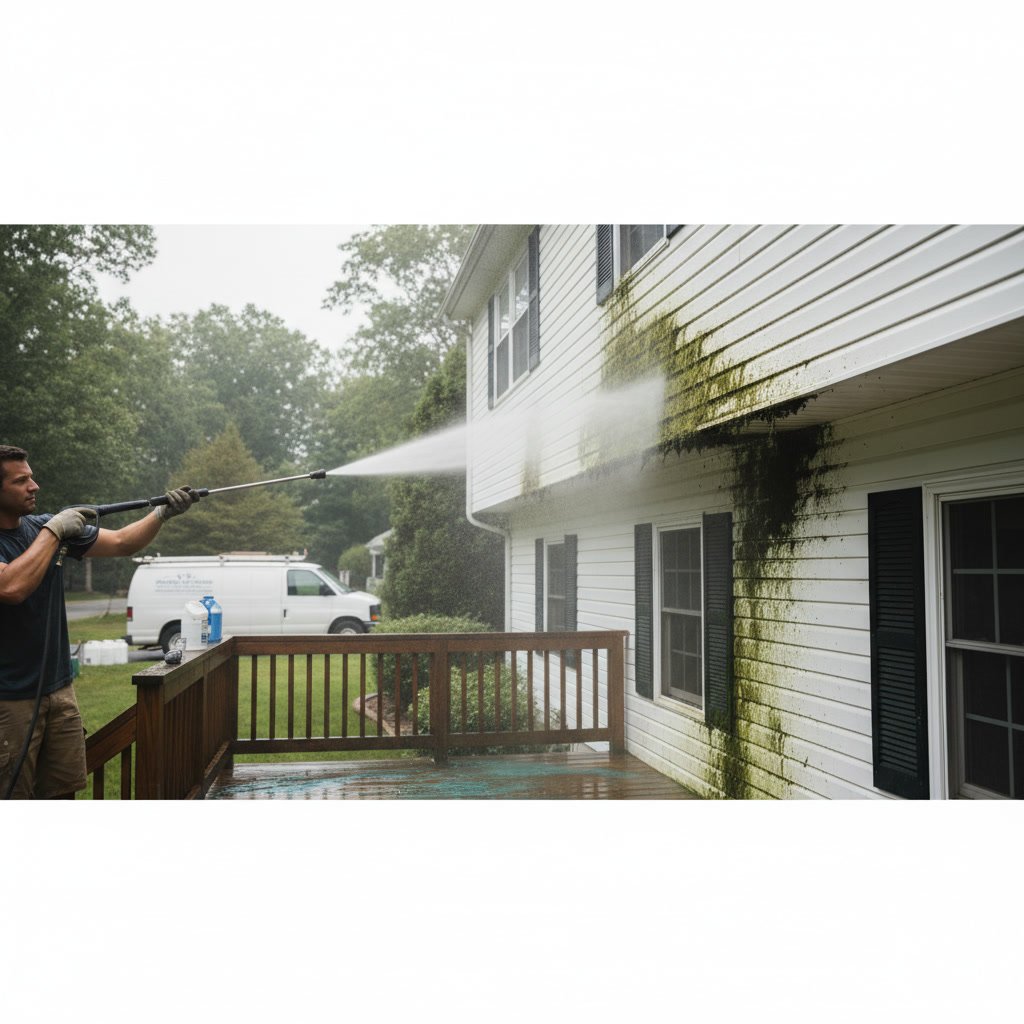
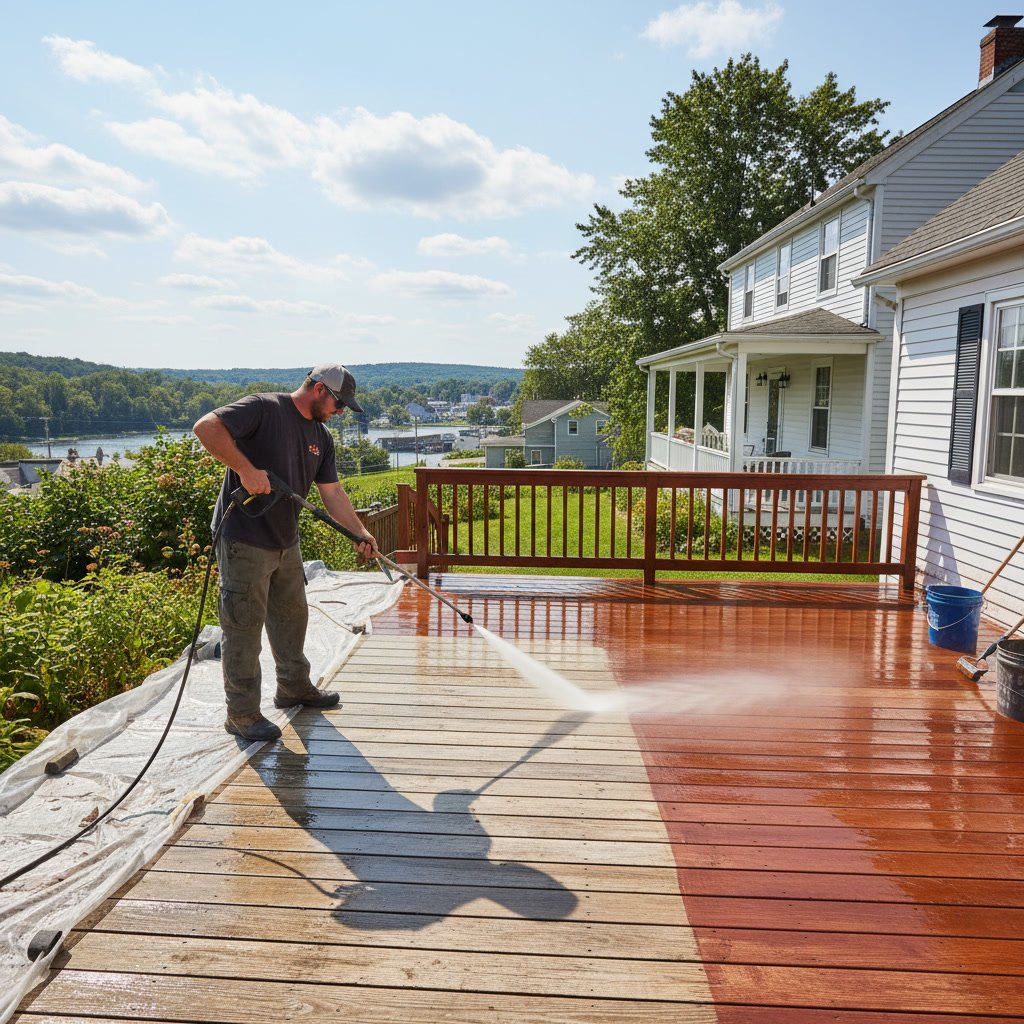
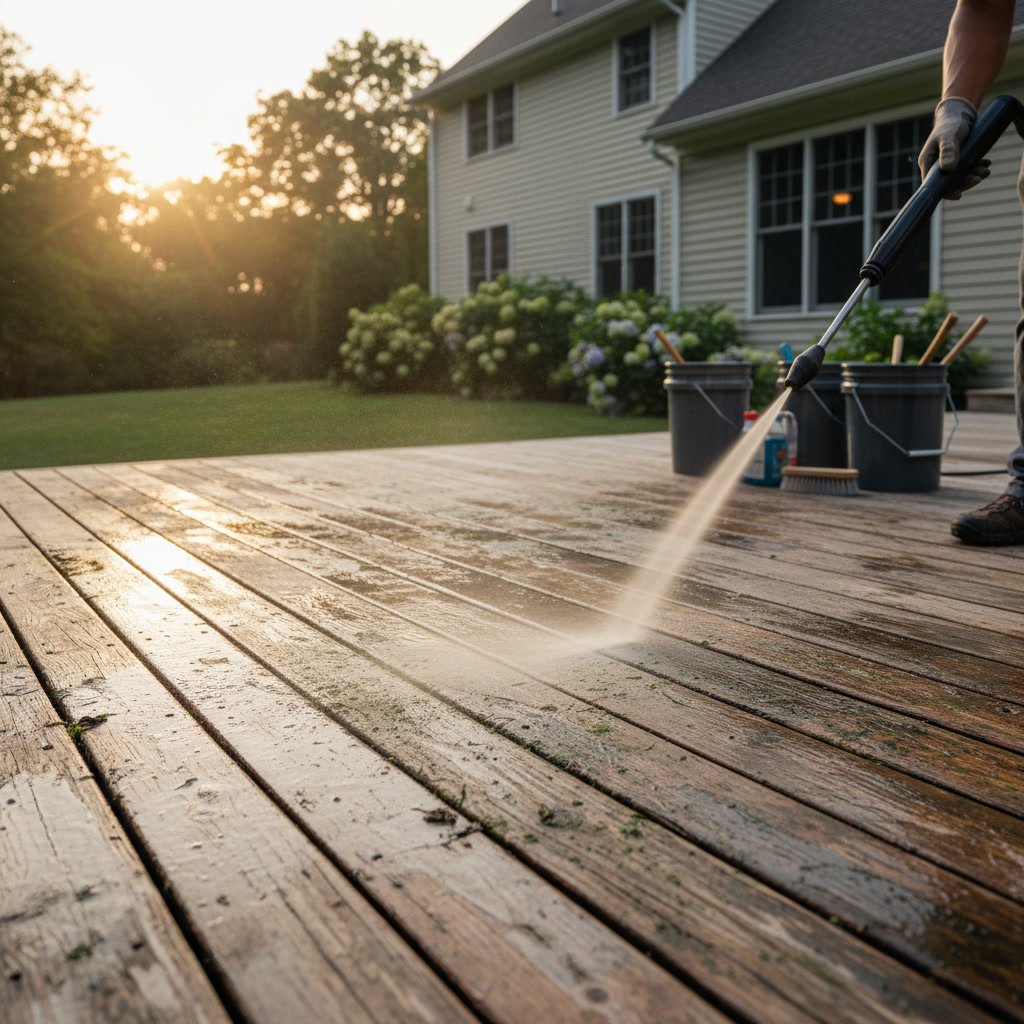
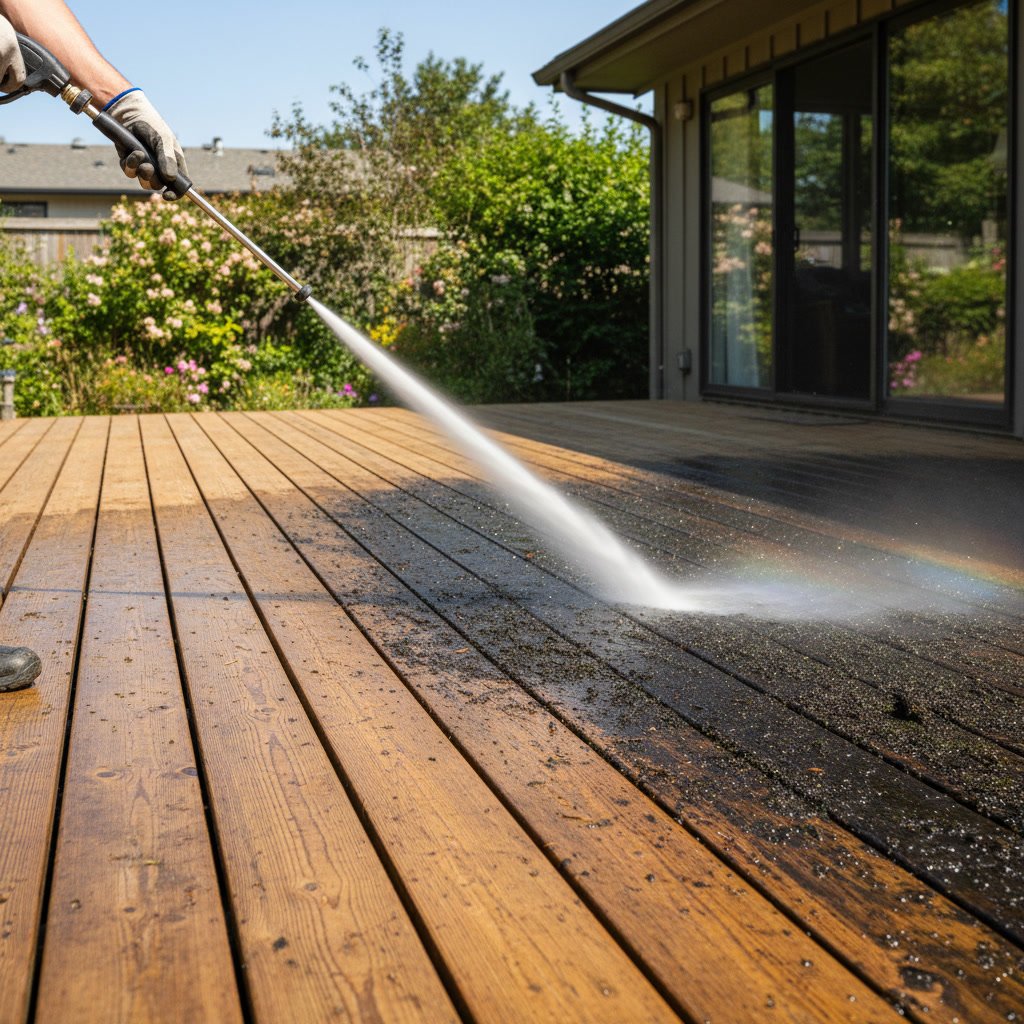
Low-pressure washing removes years of accumulated grime, mold, mildew, and algae without damaging wood fibers. The process cleans deep into the grain, extracting embedded dirt that household cleaning cannot reach. This thorough removal eliminates the food source that sustains rot organisms.
Professional cleaners also clear the gaps between boards where water and debris accumulate. These spaces need to drain freely for your deck to dry properly after rain. When cleaning restores proper water flow, your deck spends less time wet and more time protected.
Specialized cleaning solutions neutralize mold and mildew at the root level. These treatments kill existing spores and create an environment less hospitable to future growth. The result is cleaner wood that stays drier longer between maintenance visits.
Pro Tip: Schedule professional deck cleaning in spring before sealing season. This timing removes winter damage and prepares the surface for protective coatings that maximize your deck’s lifespan.
The Right Cleaning Method Makes All the Difference
Not all cleaning approaches protect your deck equally. Using the wrong pressure or technique can actually increase rot risk by damaging wood fibers or forcing water deeper into the material.
High-pressure washing strips away soft wood grain and creates a fuzzy surface that traps more moisture and dirt than before cleaning. The damage may look like aging, but it is actually mechanical destruction that opens pathways for water penetration.
Professional power washing services adjust pressure based on wood species, age, and condition. Softer woods like cedar and pine require gentler treatment than hardwoods. Older decks with weathered surfaces need even lower pressure to avoid damage.
The cleaning angle matters too. Spraying perpendicular to boards minimizes grain damage, while angled spraying can lift wood fibers. Experienced technicians know how to position the wand for maximum cleaning with minimal impact on the wood structure.
Chemical cleaners play an important role in deck rotting prevention. Oxygen-based cleaners brighten wood and kill organic growth without the harshness of chlorine bleach, which can weaken wood fibers over time. The right cleaning solution prepares wood to accept sealers and stains more effectively.
Building a Deck Maintenance Schedule That Works
Consistent maintenance prevents the accumulation of conditions that lead to rot. A simple schedule keeps your deck healthy without requiring constant attention.
Clean your deck professionally at least once per year, preferably in spring. This annual service removes winter damage and prepares the surface for summer use. If your deck sits under heavy tree cover or near water, consider twice-yearly cleaning to manage increased debris and moisture exposure.
Between professional services, sweep your deck monthly to remove leaves and organic debris. This simple task prevents moisture-trapping buildup that leads to mold and rot. Pay special attention to corners and against the house where debris collects.
Inspect your deck twice per year for early rot signs. Press a screwdriver into boards and structural members in multiple spots. Healthy wood resists penetration. Soft or spongy areas indicate rot that needs immediate attention before it spreads.
Check sealers and stains annually. Splash water on your deck surface. If it beads up, your coating is still working. If water soaks in immediately, it is time to clean and reseal. Most experts recommend resealing every two to three years, though this varies based on exposure and product quality.
After learning about types of exterior cleaning services for your home, many homeowners realize that comprehensive property maintenance protects more than just the deck.
Warning Signs Your Deck Needs Immediate Attention
Some deck problems require urgent professional help to prevent extensive damage and safety hazards. Recognizing these signs early saves money and protects your family.
Soft spots that compress under pressure indicate advanced rot. These areas have lost structural integrity and may fail under load. Do not wait to address soft boards, especially on stairs and high-traffic areas where collapse risk is greatest.
Discolored patches that appear black, gray, or green signal mold and mildew penetration. Surface cleaning may not eliminate deep infections. Professional assessment determines whether boards need replacement or can be salvaged through intensive treatment.
Loose nails and fasteners suggest wood shrinkage from decay. As rot consumes wood fiber, boards lose mass and fasteners no longer hold securely. This creates dangerous conditions where boards can shift or separate underfoot.
Cracked or split boards allow water to penetrate the wood core where damage accelerates. Small cracks spread quickly through freeze-thaw cycles. Addressing cracks early through sealing or board replacement prevents larger structural problems.
Powdery residue or fine sawdust near structural members indicates carpenter ant or termite activity. These insects prefer damp, rotting wood. Their presence confirms moisture problems that need correction beyond simple cleaning.
Additional Protection Strategies Beyond Cleaning
While professional cleaning forms the foundation of deck rotting prevention, other strategies provide additional protection layers.
Improve drainage around your deck perimeter. Gutters and downspouts should direct water away from deck structures. Consider extending downspouts or adding splash blocks to prevent water from pooling near posts and joists. Since you are already maintaining gutters, combining gutter cleaning with deck care creates a comprehensive moisture management approach.
Trim vegetation near your deck. Shrubs and branches touching deck surfaces hold moisture against wood and prevent air circulation. Maintaining at least 12 inches of clearance allows better drying after rain and reduces mold growth from constant shade.
Install drip edges on deck boards where possible. Small beveled cuts on board edges help water run off instead of pooling. This modification works especially well on flat-laid boards that otherwise trap water on their surface.
Use rot-resistant materials for repairs and replacements. When sections need rebuilding, consider pressure-treated lumber, cedar, or composite materials for high-risk areas like ground-level framing. These materials extend deck life in moisture-prone locations.
Apply quality sealers immediately after professional cleaning. The clean, open wood grain absorbs protective coatings most effectively in the days following washing. This timing maximizes sealer penetration and performance. Many homeowners coordinate this work as described in guidance about deck staining schedules to ensure optimal results.
The Real Cost of Neglecting Deck Maintenance
Delaying deck care seems like a cost savings until rot forces expensive repairs or complete replacement. Understanding these costs puts maintenance expenses in perspective.
Minor rot repair costs $300 to $800 for replacing a few boards and treating surrounding areas. This work becomes necessary when small problems go unaddressed for years. Professional cleaning costs a fraction of this amount and prevents the damage entirely.
Major structural repairs run $2,000 to $8,000 when rot compromises joists, beams, or posts. These hidden structural members cost more to access and replace than surface boards. The damage often remains invisible until failure risk becomes serious.
Complete deck replacement ranges from $8,000 to $25,000 depending on size and materials. This represents the ultimate cost of neglect, where rot spreads so extensively that repair is impractical. Most decks reaching this point could have been saved through regular maintenance costing a few hundred dollars annually.
Professional deck cleaning services typically cost $200 to $500 for an average Connecticut deck. This investment protects thousands in replacement costs while extending deck life by 10 to 15 years compared to neglected structures.
Safety liability adds another cost dimension. If rotted deck boards injure a family member or guest, medical expenses and potential legal costs dwarf any maintenance savings. Regular inspection and care prevent these tragic and expensive scenarios.
Frequently Asked Questions
How often should I have my deck professionally cleaned?
Most Connecticut decks benefit from professional cleaning once per year, ideally in spring before the heavy-use summer season. Decks under heavy tree cover, near water, or in shaded areas may need cleaning twice per year to manage increased organic buildup and moisture. Annual cleaning removes accumulated grime and mold before they penetrate deep enough to cause rot.
Can I prevent deck rot with DIY cleaning?
Regular sweeping and light maintenance help between professional services, but DIY methods rarely achieve the deep cleaning necessary for effective deck rotting prevention. Homeowner equipment lacks the pressure control and specialized solutions that safely remove embedded contaminants without damaging wood. Professional cleaning every one to two years provides the thorough treatment decks need to resist rot while DIY efforts maintain appearance between services.
What is the best time of year to clean my deck?
Spring offers the ideal window for deck cleaning in Connecticut. Temperatures are moderate, wood has dried from winter moisture, and you have time to seal before summer use. Cleaning in April or May removes winter damage and prepares the surface for protective coatings that cure best in warm, dry conditions. Fall cleaning works too but leaves less time for sealing before cold weather returns.
How do I know if my deck has rot or just surface dirt?
Press a screwdriver or awl into suspect areas with moderate force. Healthy wood resists penetration and feels solid. Rotted wood feels soft, allows easy penetration, or crumbles around the tool. Surface dirt and stains do not affect wood hardness. Dark discoloration alone may be mold or mildew on sound wood, which cleaning can remove, but any softness indicates decay requiring repair.
Will pressure washing damage my older deck?
Professional low-pressure washing safely cleans older decks when technicians adjust pressure for wood condition. Weathered or softwood decks require gentler treatment than new hardwood. The risk comes from excessive pressure or improper technique, which is why experienced operators assess each deck individually. Proper cleaning removes threats without damaging wood fibers, while neglect guarantees continued deterioration from rot and mold.
Protect Your Investment Starting Today
Deck rotting prevention requires understanding the conditions that cause decay and taking consistent action to eliminate them. Professional cleaning removes the moisture, organic debris, and contaminants that support fungal growth, extending your deck’s life by years and preventing thousands in repair costs. Combined with regular inspection and timely sealing, this approach keeps your outdoor living space safe and beautiful for decades.
Patriot Pressure Washing serves homeowners throughout Cromwell and surrounding Connecticut communities with professional deck cleaning that protects against rot and wood damage. Our low-pressure techniques remove years of buildup without harming wood fibers, preparing your deck for sealing and years of enjoyment. Contact us at +18606612407 to schedule your deck inspection and cleaning service.