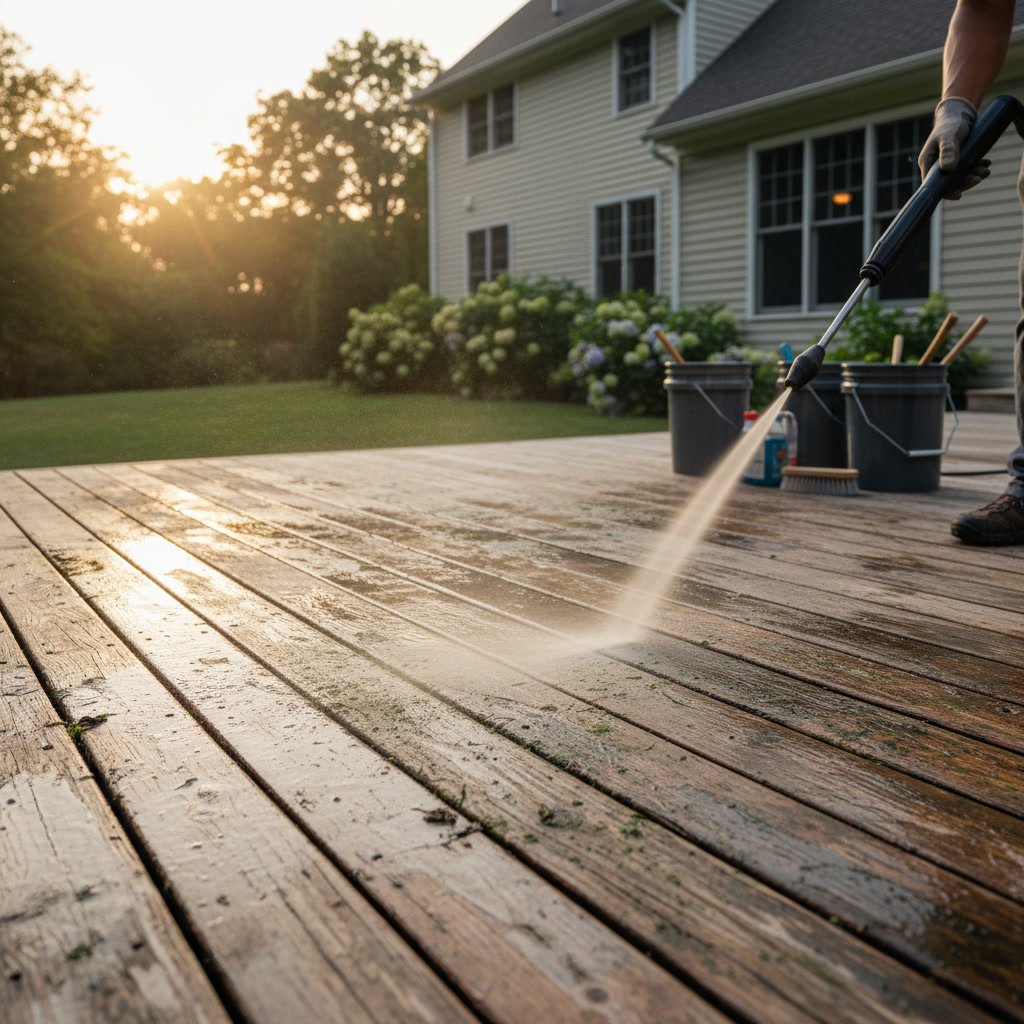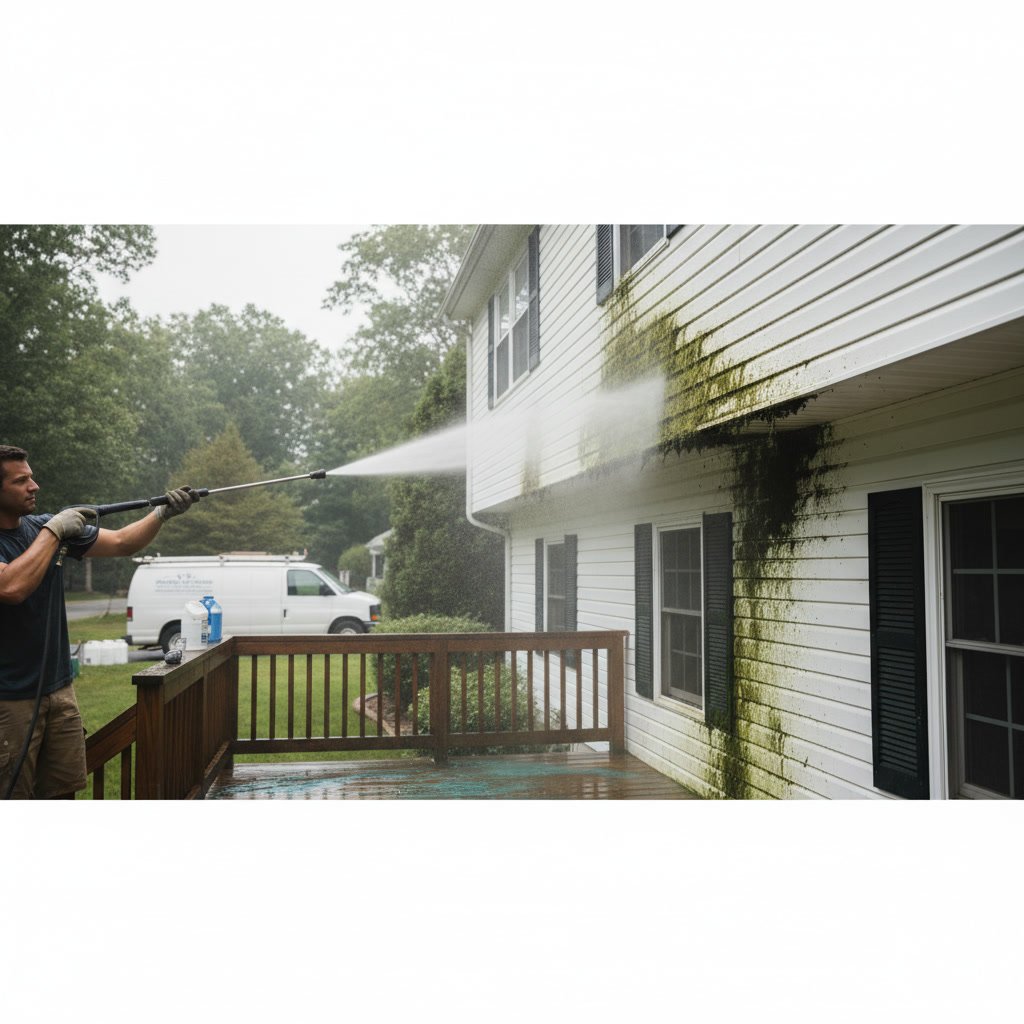
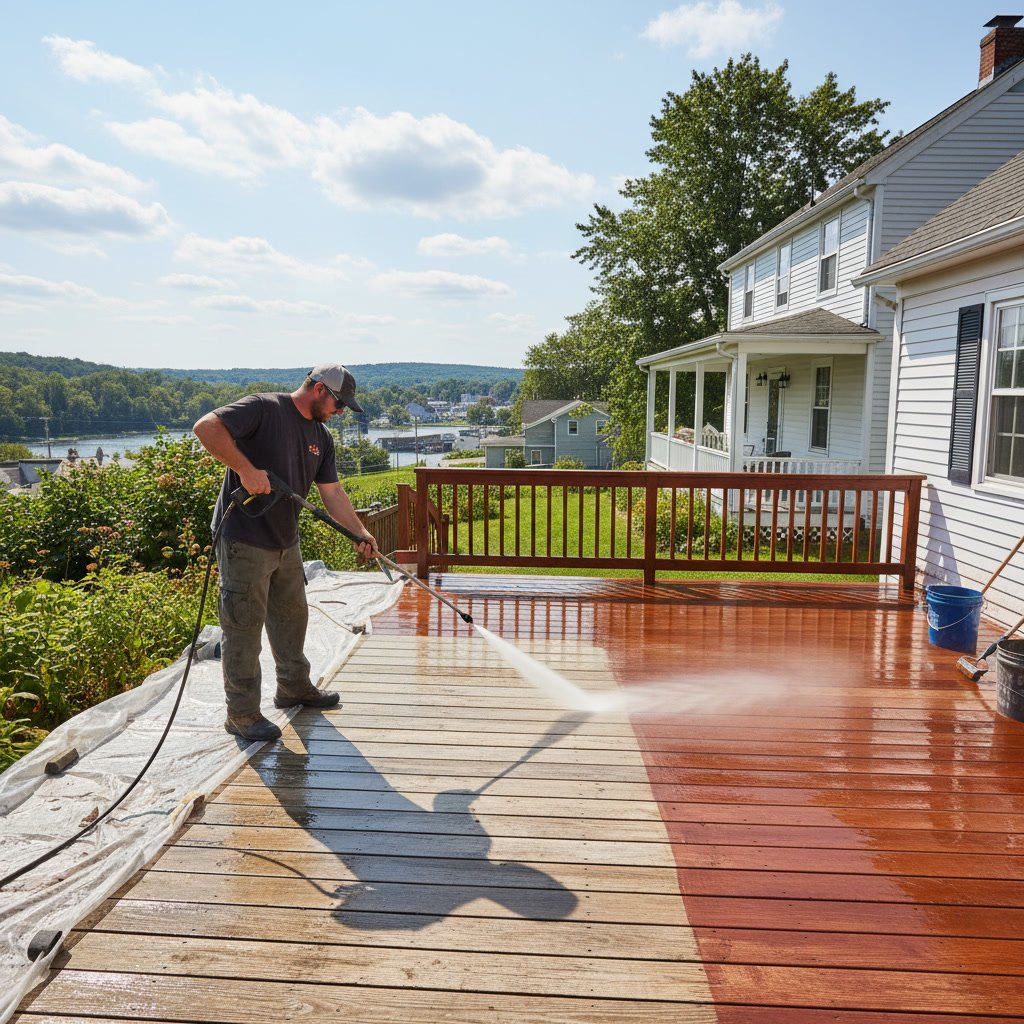
Your deck looks brand new after a thorough pressure wash, but now you’re staring at bare wood wondering when you can apply stain. The answer isn’t as simple as grabbing a brush the next day. Following the right deck staining schedule after pressure washing determines whether your stain lasts two years or ten, and whether you’ll face peeling, bubbling, or premature failure.
Connecticut’s humidity, temperature swings, and seasonal weather patterns create specific challenges for deck maintenance. This guide walks you through the exact timing, preparation steps, and maintenance intervals that work best in Middletown and surrounding areas.
Why Wait Between Pressure Washing and Staining
Pressure washing drives water deep into wood pores and fibers. Even though the surface appears dry within hours, moisture remains trapped inside for days or weeks depending on wood type, weather conditions, and the intensity of the wash.
Applying stain to wood that hasn’t fully dried creates a barrier that traps moisture inside. This leads to several problems: the stain won’t properly penetrate or adhere, you’ll see uneven color absorption, and within months you’ll notice peeling or bubbling as trapped moisture tries to escape.
Most stain manufacturers void their warranties if you apply their product to wood with moisture content above 15%. Professional deck cleaning includes considerations for proper drying time based on your specific deck conditions.
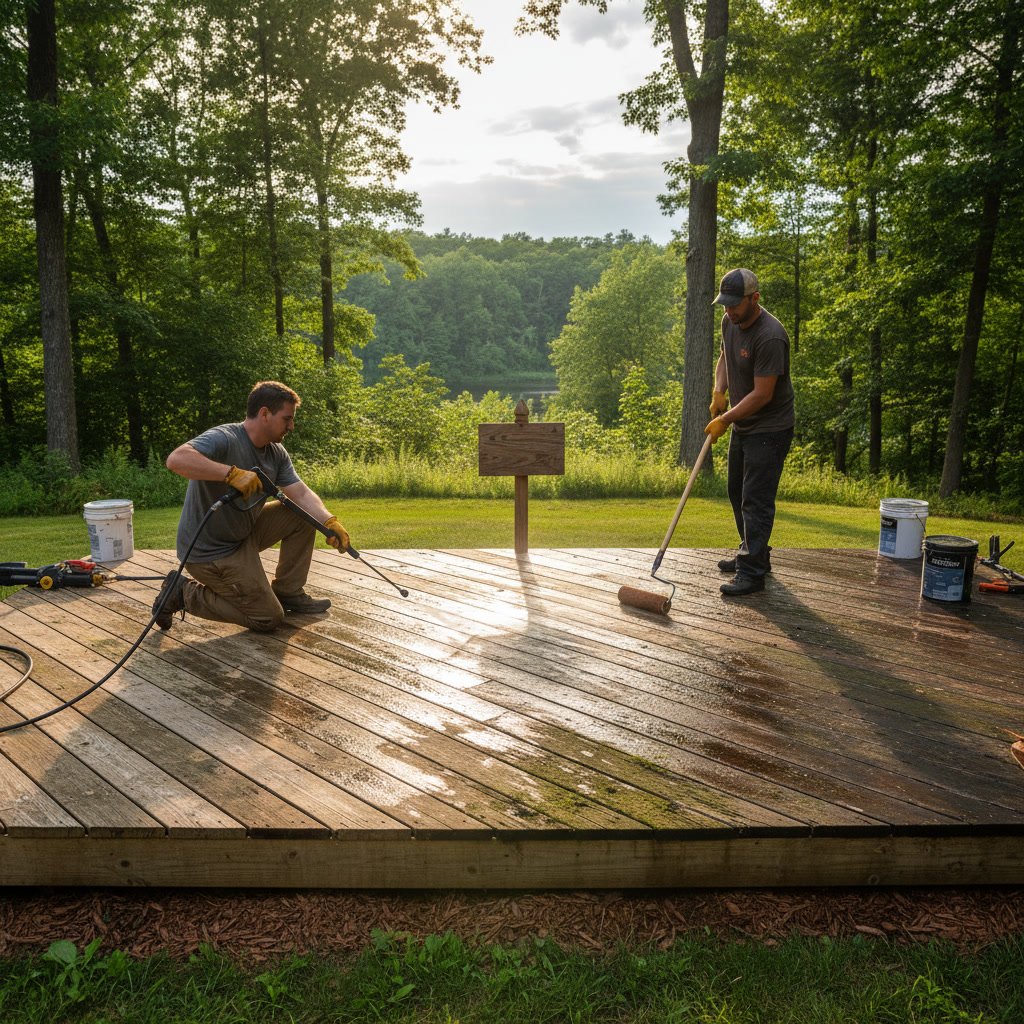
Optimal Waiting Period After Pressure Washing
The minimum wait time between pressure washing and staining is 48 hours in ideal conditions. Ideal means temperatures between 70-85°F, low humidity below 50%, and full sun exposure during daylight hours.
In Connecticut’s climate, realistic drying times run longer. Plan for 3-5 days minimum during spring and fall when humidity stays higher. Summer months with consistent sun and low humidity may allow staining after 2-3 days.
Testing Wood Moisture Content
Never guess about dryness. Use the water droplet test by sprinkling a few drops on different deck sections. If water beads up, the wood is still too wet. If it soaks in immediately, you’re ready to stain.
Professional contractors use moisture meters that give precise readings. Wood moisture should register at 12-15% or lower before staining. Some contractors include moisture testing as part of their service to ensure proper timing.
Weather Factors That Extend Drying Time
Rain or high humidity after washing resets your clock. Each precipitation event adds 1-3 days to drying time depending on rainfall amount. Morning dew alone can keep surface moisture elevated.
Decks in full shade dry 50-75% slower than those in direct sun. North-facing decks or those under heavy tree cover may need a full week even in good weather. Wind speed also matters as air movement accelerates moisture evaporation.
Pro Tip: Schedule pressure washing during a stretch of dry, warm weather with no rain in the 5-7 day forecast. This gives you the best chance of optimal staining conditions without delays.
The Complete Deck Staining Schedule Timeline
A proper deck staining schedule extends beyond the initial application. Connecticut’s climate demands a systematic approach to maintain protection and appearance over years.
Year One After New Deck Installation
New pressure-treated lumber needs 6-12 months to dry and weather before accepting stain properly. The wood arrives saturated with chemical preservatives and moisture. Staining too early causes adhesion failure.
Test new wood with the water droplet method. When water soaks in rather than beading, the wood has dried sufficiently. This typically happens after one full summer season of weathering.
Year Two Through Five
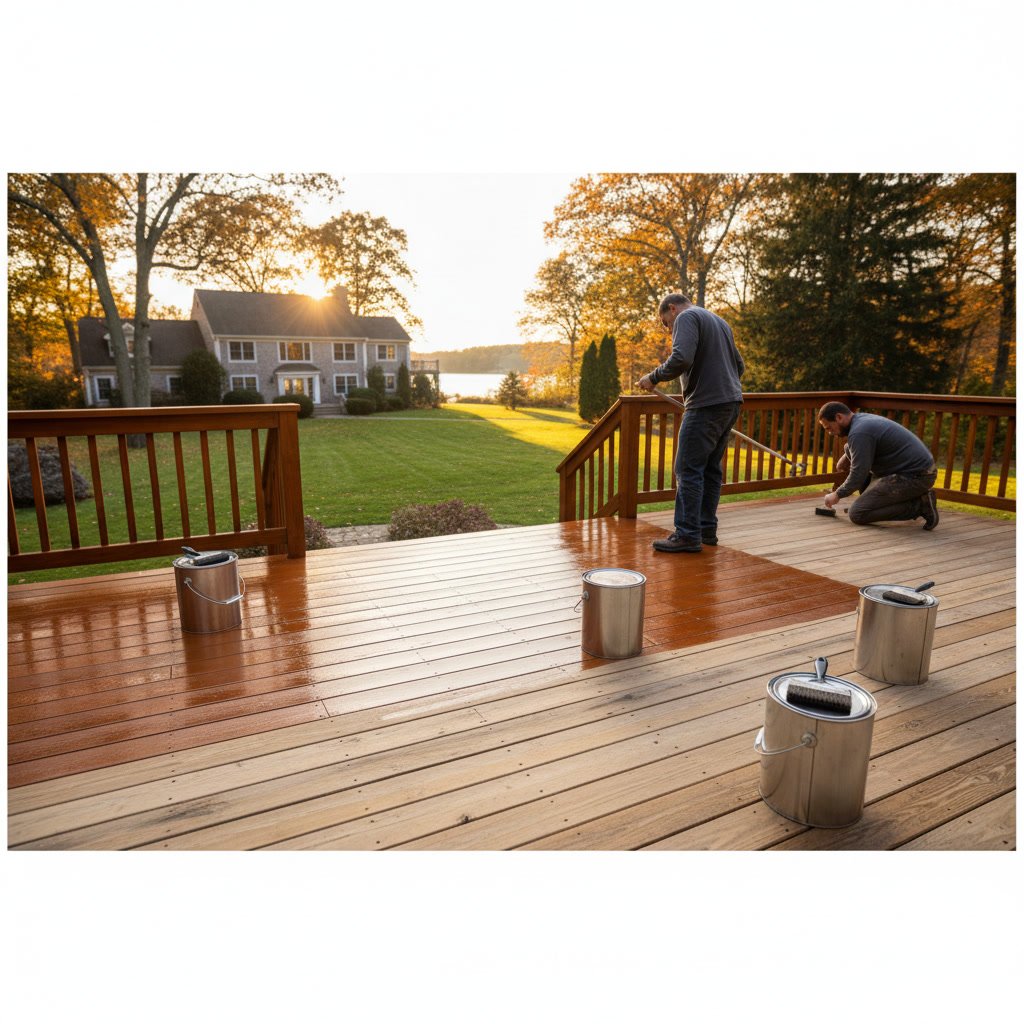
After the initial stain application, inspect your deck every spring. Most quality stains last 2-3 years before requiring reapplication in Connecticut’s climate. High-traffic areas and horizontal surfaces wear faster than vertical railings.
Plan to clean and restain every 2-3 years depending on product quality and exposure. Decks with southern exposure or limited shade need more frequent attention than protected decks.
Professional pressure washing before each staining cycle removes old, weathered stain layers and prepares the surface for fresh application.
Ongoing Maintenance Schedule
Between full staining cycles, perform annual inspections each spring. Look for areas where stain has worn thin, especially on stair treads, handrails, and deck boards near high-traffic doorways.
Touch up these worn spots annually with the same stain product. This extends the time between full stripping and restaining projects and prevents wood damage from UV and moisture exposure.
Best Seasons for Deck Staining in Connecticut
Spring and fall offer the most reliable conditions for deck staining in Connecticut. Temperatures stay moderate, humidity tends to be lower than summer, and you can find consistent dry weather windows.
Spring Staining Advantages
Late May through June provides excellent staining weather after spring rains taper off. You protect your deck before summer’s heavy use begins. Temperatures in the 65-80°F range are ideal for stain application and curing.
Watch for late spring cold snaps. Overnight temperatures below 50°F during the curing period can affect stain performance. Check the specific product requirements for your chosen stain.
Fall Staining Benefits
September through mid-October offers another prime window. Lower humidity, cooler temperatures, and reduced insect activity make application easier. You’re also protecting your deck before winter weather arrives.
Avoid staining too late in fall. Most stains require temperatures above 50°F during application and for 24-48 hours afterward. Connecticut’s weather can turn quickly in late October.
Why Summer and Winter Don’t Work
Summer heat above 90°F causes stain to dry too quickly, preventing proper penetration and creating lap marks. High humidity also extends drying times between coats.
Winter temperatures drop too low for proper stain curing. Even mild winter days may seem suitable, but overnight freezing damages uncured stain.
Choosing the Right Stain for Connecticut Decks
Your deck staining schedule depends partly on the product you choose. Different stain types offer varying lifespans and maintenance requirements.
Transparent vs Semi-Transparent Stains
Transparent stains showcase natural wood grain but offer the least UV protection. They typically need reapplication every 1-2 years. These work best for decks under significant shade or covered areas.
Semi-transparent stains provide more pigment and UV protection while still showing wood grain. They last 2-3 years in Connecticut’s climate and represent the most popular choice for full-sun decks.
Solid Stains and Paint
Solid color stains and paint completely hide wood grain but offer maximum protection. They last 3-5 years before needing attention. The tradeoff is more difficult preparation work when it’s time to restain since you must remove all old coating.
Consider solid stains for older decks with significant weathering or boards of varying color. They create a uniform appearance while protecting compromised wood.
Oil-Based vs Water-Based Products
Oil-based stains penetrate deeper and typically last longer but require mineral spirits for cleanup and take longer to dry. Water-based stains dry faster, clean up with soap and water, and have lower VOC emissions.
Connecticut’s environmental regulations favor water-based products. They perform well in our climate and fit better into tight deck staining schedules when weather windows are limited.
Key Takeaway: Match your stain type to your deck’s exposure and your maintenance commitment. A quality semi-transparent stain offers the best balance of protection, appearance, and manageable maintenance intervals for most homeowners.
Common Deck Staining Mistakes That Ruin Your Schedule
Several errors can disrupt your carefully planned deck staining schedule and force premature reapplication.
Skipping Surface Preparation
Pressure washing alone doesn’t always prepare wood adequately. Old stain, mill glaze on new wood, or raised grain can all prevent new stain from adhering properly. Many situations require additional sanding or brightening solutions after washing.
Deck cleaners and brighteners restore the wood’s natural pH after pressure washing. This step is especially important after aggressive cleaning or when working with aged wood.
Applying Too Much or Too Little Stain
Over-application leaves sticky surfaces that never fully cure and attract dirt. Under-application provides inadequate protection and forces earlier recoating. Follow manufacturer coverage rates which typically range from 150-350 square feet per gallon depending on wood porosity.
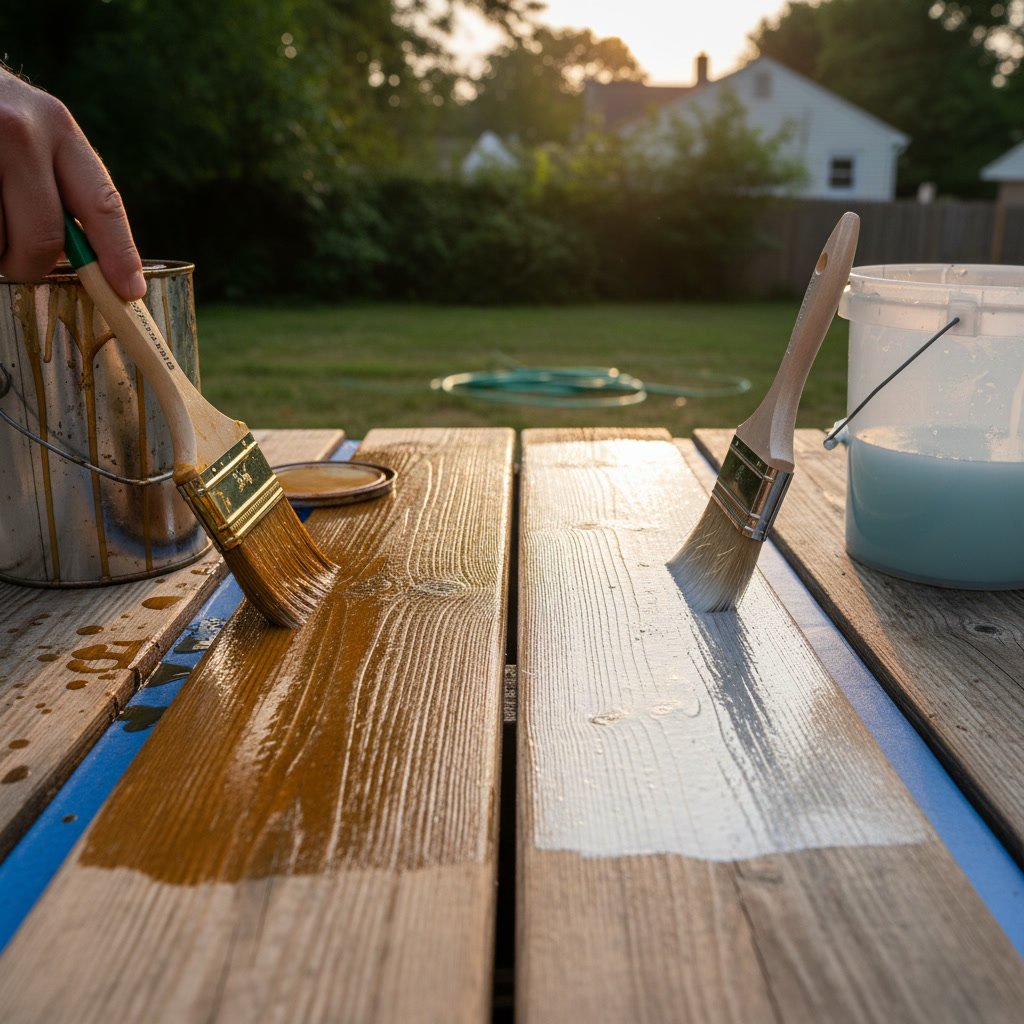
Apply stain in thin, even coats. Two thin coats outperform one heavy coat every time. The wood should look evenly colored without puddles or dry spots.
Ignoring Weather Forecasts
Rain within 24 hours of stain application can ruin the entire job. Most stains need 24-48 hours of dry weather to cure properly. In Connecticut’s changeable climate, this means watching forecasts carefully and being prepared to delay if conditions deteriorate.
Wind on application day spreads overspray and causes uneven drying. Extreme heat creates lap marks. Choose calm days with temperatures between 60-85°F when possible.
Professional vs DIY Deck Staining
The decision to hire professionals or handle deck staining yourself affects your overall schedule and results.
Professional services like Patriot Pressure Washing bring commercial-grade equipment, experience with Connecticut’s specific climate challenges, and insurance protection. They complete jobs faster with more consistent results and often provide warranties on their work.
DIY projects save money but require significant time investment for preparation, application, and cleanup. You’ll need to purchase or rent equipment and products. First-time DIYers should budget 2-3 times longer than estimated project times.
Consider the size of your deck and your schedule flexibility. Small decks under 200 square feet are manageable DIY projects. Larger decks, multi-level structures, or complex railings benefit from professional expertise.
Professional power washing services often pair cleaning and staining, managing the entire deck staining schedule from initial wash through final application with proper timing between steps.
Extending Time Between Staining Cycles
Proper maintenance extends your deck staining schedule and reduces long-term costs.
Regular cleaning prevents dirt and organic matter buildup that degrades stain. Sweep your deck weekly and wash it with mild soap and water 2-3 times per season. This removes debris before it embeds in the stain.
Address spills immediately. Food, grease, and plant tannins can stain through protective coatings if left to sit. Keep a deck cleaner on hand for spot treatment.
Trim vegetation around your deck to improve air circulation and reduce moisture. Remove leaves and debris from between deck boards where they trap moisture and promote decay.
Inspect deck hardware annually. Tighten loose screws and replace rusted fasteners. Water intrusion around fasteners accelerates stain failure in those areas.
Move planters and furniture periodically to prevent uneven wear and trapped moisture underneath. These items block UV rays, creating color differences in the stain over time.
Many homeowners pair deck maintenance with other exterior cleaning services to keep their entire property in top condition throughout the year.
Frequently Asked Questions
How long should I wait to walk on my deck after staining?
Most stains allow light foot traffic after 24 hours and full use after 48-72 hours. However, complete curing takes 7-14 days depending on the product. Avoid placing furniture or heavy objects during this full curing period, and don’t wash the deck for at least 30 days after staining.
Can I stain my deck in sections over multiple weekends?
This approach rarely produces good results. Visible lap marks appear where old and new stain overlap, even when using the same product. Horizontal deck boards especially show these transitions. Plan to complete at least entire deck sections or all horizontal surfaces in one session to maintain a uniform appearance.
What happens if it rains before my deck fully dries after pressure washing?
Rain during the drying period extends your waiting time but doesn’t damage the cleaned wood. Simply restart your drying clock from the last rain event. Test moisture levels before staining to confirm the wood has dried adequately. Connecticut’s spring weather often requires patience with multiple drying cycles.
Do I need to strip old stain before applying new stain?
If the existing stain is still adhering well with no peeling or flaking, you can clean and apply a maintenance coat of compatible stain. However, if the old stain is failing, worn through in spots, or you’re changing stain types, complete stripping is necessary. Applying new stain over failing old stain causes premature failure of the new application.
Should I seal my deck after staining?
Most modern deck stains include sealers in their formulation, making a separate sealing step unnecessary. Applying additional sealer over these products can actually reduce performance by preventing proper stain penetration and creating a surface film that traps moisture. Check your specific product instructions, but separate sealing is rarely needed with quality stain products.
Protect Your Deck Investment With Proper Timing
Following a proper deck staining schedule after pressure washing protects your investment and keeps your outdoor space looking its best. The key factors are adequate drying time between washing and staining, choosing the right season for your project, and maintaining consistent reapplication intervals based on your deck’s exposure and the products you use.
Patriot Pressure Washing serves Middletown and surrounding Connecticut communities with professional deck cleaning and preparation services. Our team understands the specific timing requirements for Connecticut’s climate and can help you plan the optimal deck staining schedule for your property.
Contact us at +18606612407 to discuss your deck maintenance needs and schedule a professional cleaning that sets you up for staining success.