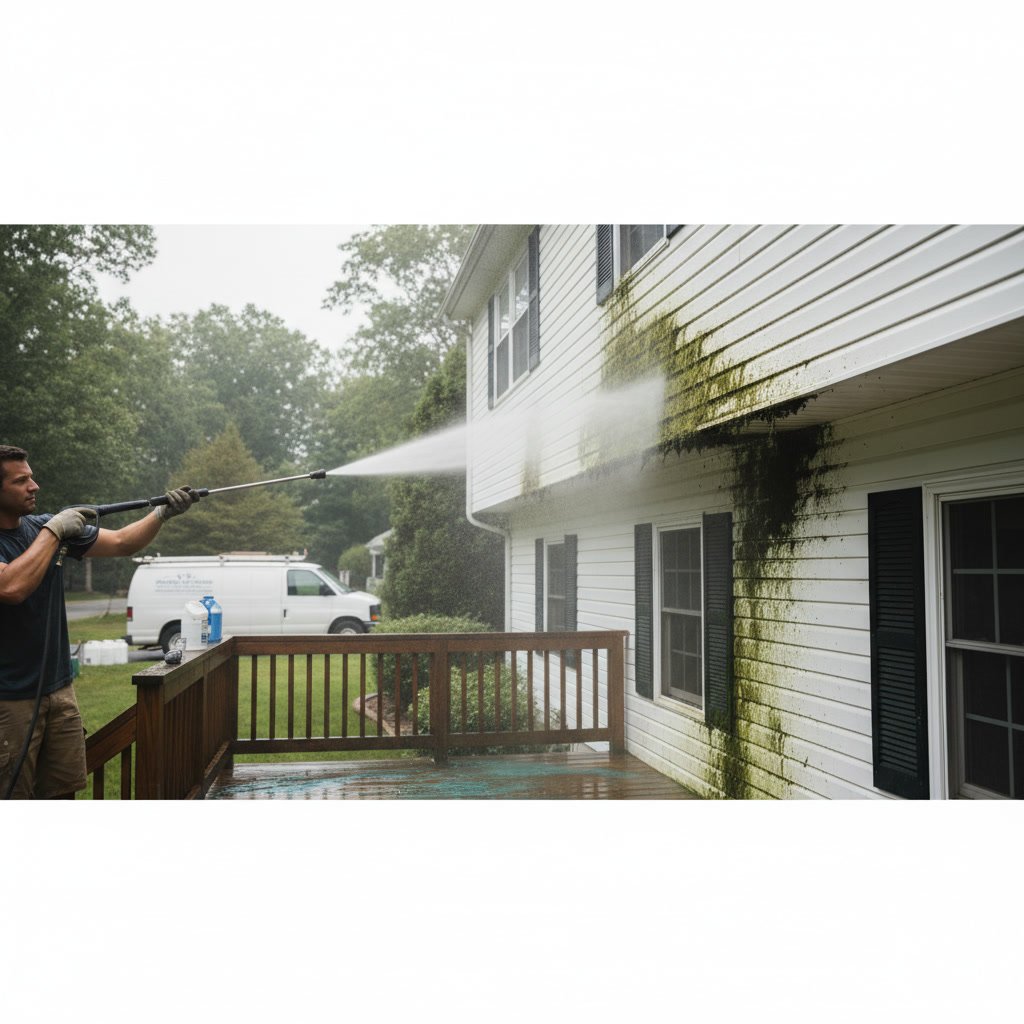
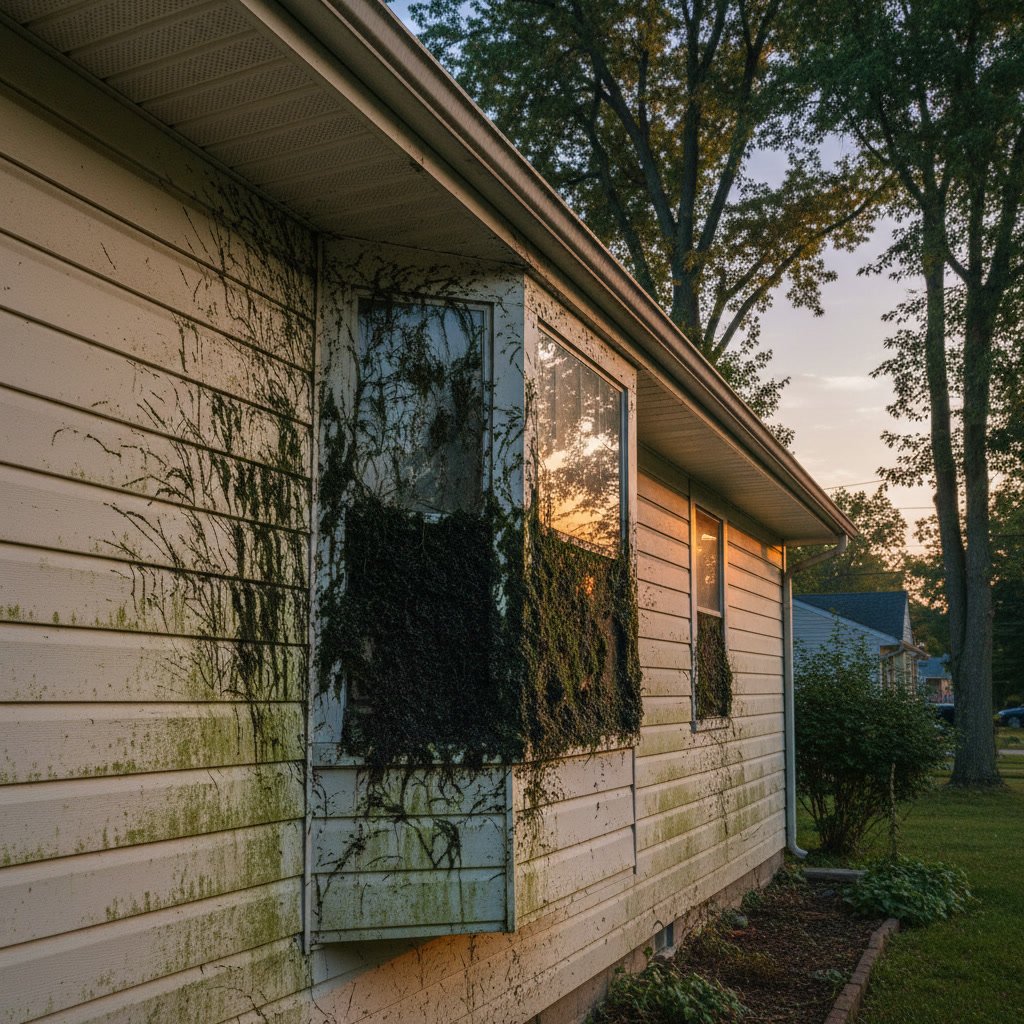
Green and black streaks running down the north side of your house aren’t just unsightly. They’re algae colonies that thrive on vinyl siding, especially in Connecticut’s humid climate. Understanding what causes algae on vinyl siding helps you prevent recurring growth and protect your home’s curb appeal and structural integrity.
Algae buildup on vinyl siding is particularly common in Middletown, CT due to the combination of moisture, shade, and organic matter that accumulates on exterior surfaces. This growth isn’t just cosmetic. Left untreated, algae can lead to permanent staining and create an environment where more destructive organisms like mold take hold.
Why Vinyl Siding Attracts Algae Growth
Vinyl siding provides an ideal surface for algae colonization. The material’s textured surface traps moisture and organic debris, creating perfect conditions for spore germination. Unlike metal or smooth surfaces that shed water quickly, vinyl’s porous texture holds moisture against the surface for extended periods.
Modern vinyl siding often contains limestone or calcium carbonate as a filler material. These compounds make the siding more affordable to manufacture, but they also provide nutrients that algae species consume as they grow. The algae literally feed on the siding material itself.
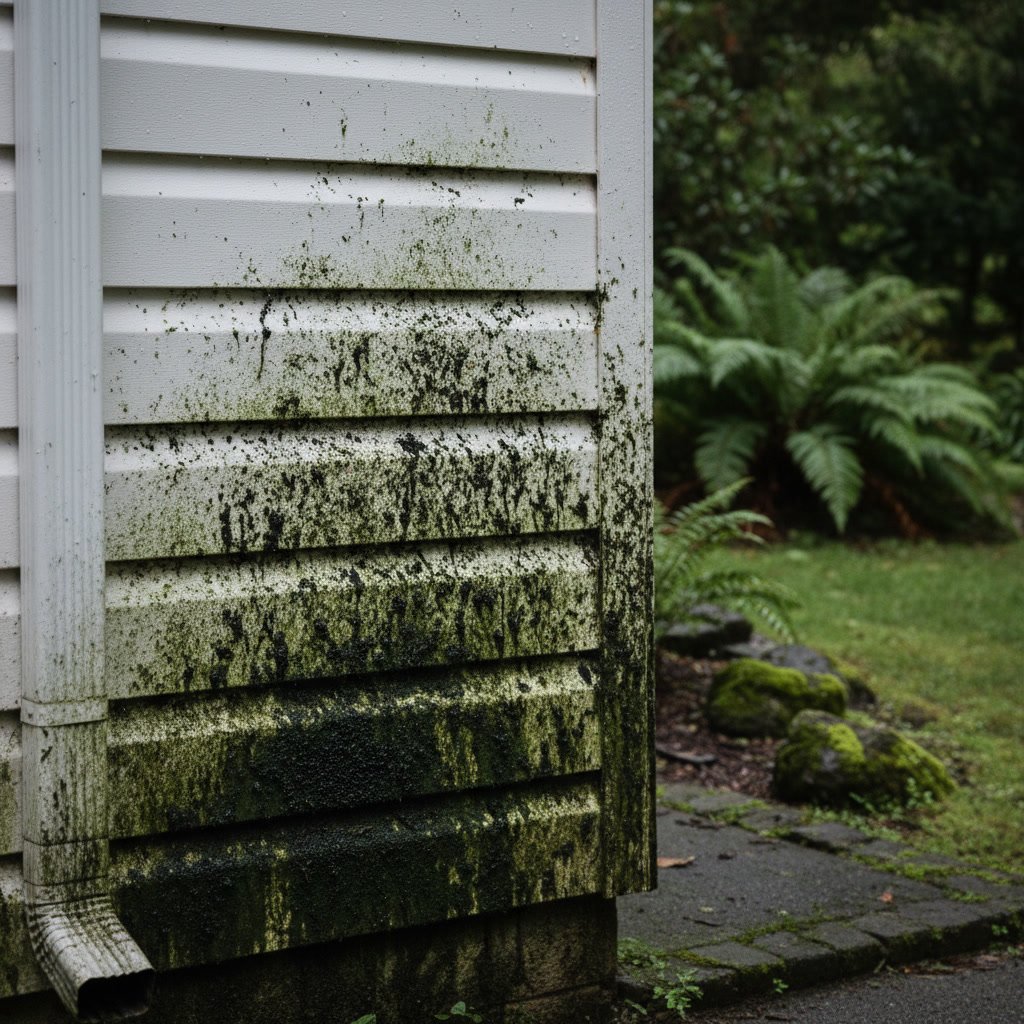
Temperature also plays a crucial role. Vinyl siding on north-facing walls stays cooler throughout the day, retaining moisture longer than sun-exposed surfaces. This creates an extended window for algae growth each day, allowing colonies to establish themselves before the surface dries out.
Connecticut’s Climate and Algae Growth
Connecticut’s weather patterns create a nearly perfect breeding ground for algae on vinyl siding. The state averages 45 to 50 inches of precipitation annually, with humidity levels frequently exceeding 70% during spring and summer months.
The combination of warm summers and adequate rainfall means vinyl siding stays damp for hours or days at a time. Morning dew alone can keep shaded surfaces moist well into the afternoon, giving algae spores ample opportunity to germinate and spread.
Middletown’s location in the Connecticut River Valley compounds these conditions. The valley’s geography traps moisture and creates microclimates where humidity lingers longer than in surrounding areas. Homes near wooded areas or water sources face even higher algae pressure.
Seasonal Patterns of Algae Growth
Spring and fall represent peak growing seasons for algae. Temperatures between 60 and 80 degrees Fahrenheit combined with frequent rain create ideal conditions. You’ll typically notice the most dramatic growth spurts during April through June and September through October.
Winter doesn’t eliminate algae, it merely slows growth. Existing colonies remain dormant during freezing temperatures but resume activity as soon as conditions improve. This is why homes that weren’t properly cleaned before winter often show extensive green staining by early spring.
Key Environmental Factors That Promote Algae
Several specific environmental conditions determine whether your home develops severe algae problems or remains relatively clean.
Shade and Sunlight Exposure
Shade is the single most influential factor in algae growth on vinyl siding. North-facing walls receive minimal direct sunlight throughout the year, keeping surfaces cool and damp. Overhanging tree branches, neighboring structures, or architectural features that block sun exposure create problem zones.
Direct sunlight has a natural sterilizing effect. UV radiation damages algae cells and heat evaporates moisture before colonies can establish themselves. Homes with significant tree cover or dense landscaping near the foundation experience algae growth rates three to five times higher than fully exposed properties.
Proximity to Water Sources
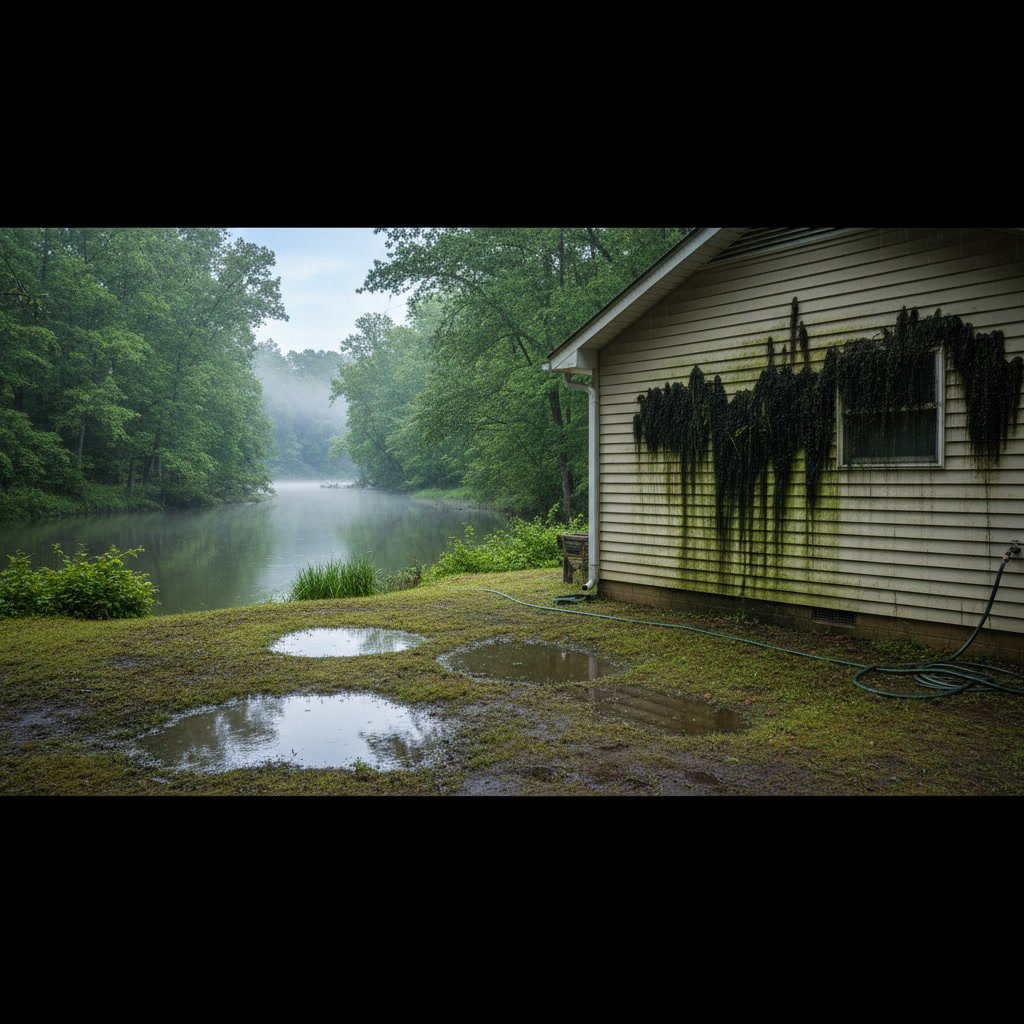
Properties within 500 feet of rivers, lakes, or wetlands face elevated algae pressure. The Connecticut River runs through Middletown, and homes in riverside neighborhoods consistently show more aggressive algae buildup than properties on higher, drier ground.
Improperly graded yards that collect standing water near the foundation also contribute to the problem. Water pooling against the house raises humidity levels around the lower sections of siding, where you’ll typically see the heaviest algae concentration.
Organic Debris Accumulation
Pollen, dust, leaves, and insect residue collect on vinyl siding throughout the year. This organic layer provides additional nutrients for algae colonies while trapping moisture against the surface. The textured surface of vinyl acts like Velcro for airborne particles.
Homes surrounded by deciduous trees accumulate more organic matter than properties in open areas. Every rainfall washes organic compounds from leaves and branches onto your siding, essentially fertilizing algae growth with each storm.
Types of Algae Found on Vinyl Siding
Not all algae on vinyl siding looks the same. Different species create distinct appearances and require specific treatment approaches.
Gloeocapsa magma is the most common culprit behind black or dark green streaks. This cyanobacteria produces a dark protective coating that shields it from UV damage, making it particularly resilient once established. The black pigment you see is actually the bacteria’s sunscreen, not dirt.
Green algae species create the bright green powdery coating often mistaken for moss. These organisms are less aggressive than Gloeocapsa but spread more rapidly across large surface areas. They typically appear first on lower sections of siding where moisture levels are highest.
Understanding which type of algae affects your home matters when selecting exterior cleaning services. Different species respond better to specific cleaning solutions and pressures.
Health and Property Concerns
While algae itself is generally not toxic, the conditions that support its growth often allow more problematic organisms to flourish.
Mold Development
Algae buildup creates a moisture-rich environment where mold spores can germinate. Once mold establishes itself beneath algae colonies, it can penetrate siding joints and reach the sheathing beneath. This progression from surface algae to structural mold damage happens gradually but inevitably on neglected homes.
The same residential house washing that removes algae also eliminates the conditions mold needs to take hold. Regular cleaning prevents the cascade of problems that begins with simple algae growth.
Impact on Property Value
A home covered in green or black streaks creates an immediate negative impression with potential buyers. Real estate professionals consistently report that homes with visible algae growth receive lower initial offers and spend longer on the market compared to well-maintained properties.
The perceived neglect suggested by algae-stained siding makes buyers question what other maintenance has been deferred. Even if the rest of your home is immaculate, dirty siding undermines confidence in the property’s overall condition.
Pro Tip: Schedule professional cleaning in spring before listing your home for sale. The investment typically returns 3 to 5 times its cost through higher sale prices and faster transactions.
Long-Term Siding Damage
Algae growth accelerates vinyl siding degradation in several ways. The organisms’ metabolic processes produce acidic byproducts that etch the siding surface, creating microscopic pits where more algae can anchor. This roughened surface becomes increasingly difficult to clean with each growth cycle.
Prolonged moisture exposure from algae colonies causes vinyl to become brittle. Siding that should last 30 to 40 years may need replacement after 20 years if algae growth goes unchecked. The green staining you see on the surface signals ongoing chemical interactions that weaken the material underneath.
Prevention Strategies for Homeowners
Preventing algae buildup requires addressing the environmental conditions that support growth rather than repeatedly treating symptoms.
Trim Trees and Improve Sunlight
Pruning tree branches that overhang or shade your home’s exterior is the most effective long-term prevention strategy. Increased sunlight exposure naturally inhibits algae while accelerating drying after rain or morning dew.
Focus on north-facing walls first, where shade-related algae problems are most severe. Even partial sunlight for a few hours daily significantly reduces algae growth rates. Professional arborists can identify which branches to remove without compromising tree health or aesthetics.
Maintain Proper Drainage
Ensure gutters channel water at least four to six feet away from your foundation. Clogged or damaged gutters overflow onto siding, creating constant moisture that feeds algae colonies. Regular gutter cleaning prevents these overflow issues.
Grade soil away from the foundation at a minimum slope of one inch per foot for the first six feet. This prevents water from pooling against lower siding sections where algae growth typically begins.
Apply Algae-Resistant Treatments
After professional cleaning, algae-resistant coatings can extend the time between treatments. These products contain compounds that inhibit spore germination without harming plants or landscaping. Most treatments remain effective for 12 to 24 months depending on environmental conditions.
Zinc or copper strips installed at the top of walls provide long-term algae suppression. Rain washes microscopic metal particles down the siding, creating an environment hostile to algae growth. This passive system works continuously without additional maintenance.
Professional Cleaning Solutions
While DIY cleaning attempts may seem cost-effective, improper techniques often cause more problems than they solve.
High-pressure washing can force water behind siding panels, leading to moisture damage in wall cavities. It can also pit or gouge vinyl surfaces, creating texture that accelerates future algae growth. The aggressive approach that seems to work in the short term often creates long-term problems.
Professional power washing services use soft wash techniques specifically designed for vinyl siding. These methods rely on specialized cleaning solutions rather than pressure to remove algae. The low-pressure application protects siding integrity while achieving superior cleaning results.
The cleaning solutions professionals use contain surfactants that break down algae’s protective coating and biocides that kill the organisms at a cellular level. This approach eliminates existing growth and suppresses regrowth for months longer than pressure washing alone.
Patriot Pressure Washing brings military precision to every cleaning project, ensuring thoroughness without damage. The company’s understanding of Connecticut-specific algae challenges means treatments are optimized for local conditions rather than relying on generic approaches.
Key Takeaway: Soft washing removes algae completely while protecting your siding investment. The method costs less than premature siding replacement and maintains your home’s value year after year.
Frequency of Cleaning
Most Middletown homes benefit from professional cleaning every 18 to 24 months. Properties with heavy tree cover or north-facing exposure may require annual treatments to prevent visible buildup.
Establish a regular cleaning schedule rather than waiting for algae to become obvious. Once staining is visible from the street, the algae has already been growing for months. Proactive cleaning costs less than reactive treatments because the growth is easier to remove before it becomes entrenched.
Monitor your home’s appearance after each winter. Spring represents the ideal time for cleaning because it addresses winter dormant growth before warm weather triggers explosive expansion. Fall cleaning prepares your home for winter while removing summer growth before it goes dormant.
Frequently Asked Questions
Can I use bleach to remove algae from vinyl siding?
Household bleach kills surface algae but rarely eliminates the root structures embedded in the siding’s texture. It also damages landscaping, corrodes metal trim, and fades siding color over time. Professional cleaning solutions are formulated to maximize algae removal while minimizing collateral damage to your property.
How long does it take for algae to return after cleaning?
Most professionally cleaned homes remain algae-free for 12 to 24 months depending on shade exposure and climate conditions. Homes with significant tree cover may see regrowth within 8 to 12 months. Preventive treatments and environmental modifications extend these timeframes significantly.
Is algae on vinyl siding the same as mold?
No. Algae are photosynthetic organisms that produce their own food using sunlight, while mold is a fungus that consumes organic matter. Both require moisture to thrive, but they represent different biological categories. However, algae growth often creates conditions where mold can subsequently develop.
Does vinyl siding color affect algae growth rates?
Darker siding colors absorb more heat, which can slightly inhibit algae growth through faster moisture evaporation. However, shade and moisture exposure matter far more than color. Light-colored siding shows algae staining more visibly, but dark siding grows algae at nearly identical rates when other conditions are equal.
Will power washing damage my vinyl siding?
High-pressure washing at 2,500 PSI or above can crack, warp, or dislodge vinyl siding panels. Professional soft washing uses pressures between 100 and 500 PSI combined with specialized cleaning agents, achieving thorough cleaning without structural risk. The cleaning solution does the work rather than brute force.
Protecting Your Home Investment
Algae on vinyl siding results from Connecticut’s humid climate, shade exposure, and organic debris accumulation. The green and black streaks you notice represent organisms actively feeding on your home’s exterior, creating conditions for more serious problems if left unaddressed. Understanding these causes empowers you to take preventive action and maintain your property’s appearance and value.
Professional cleaning removes existing algae while protecting your siding from damage that DIY methods often cause. Regular maintenance prevents the gradual degradation that turns a minor cleaning issue into an expensive replacement project.
Patriot Pressure Washing serves Middletown and surrounding Connecticut communities with veteran-owned reliability and expertise. If your home shows signs of algae buildup or you want to establish a preventive maintenance schedule, contact us at +18606612407 for a detailed assessment and customized cleaning solution.