Your homeowners insurance policy in Connecticut may be at risk if your roof shows visible signs of neglect. Insurance companies across the state are tightening their underwriting standards, and many now conduct exterior inspections before renewing policies. Dark streaks, moss buildup, and debris accumulation are red flags that can lead to coverage denials or non-renewals. Understanding roof cleaning insurance requirements is essential for protecting both your home and your insurance policy in 2025.
Insurance carriers want to minimize their risk, and a poorly maintained roof represents a significant liability. What many homeowners don’t realize is that routine maintenance, including professional cleaning, can make the difference between keeping your coverage and scrambling to find a new insurer at a much higher premium.
Why Insurance Companies Care About Your Roof Condition
Insurance underwriters evaluate risk based on the likelihood of filing a claim. A roof covered in algae, moss, or debris has a shorter lifespan and higher chance of developing leaks, ice dams, and structural damage. In Connecticut’s climate, moisture retention from organic growth accelerates shingle deterioration and can void manufacturer warranties.
When an insurer conducts an inspection and finds significant buildup or visible damage, they may issue a conditional renewal. This means you have 30 to 90 days to address the problem, or they will cancel your policy. Some carriers now use satellite imagery and drone technology to assess roof conditions without stepping foot on your property.
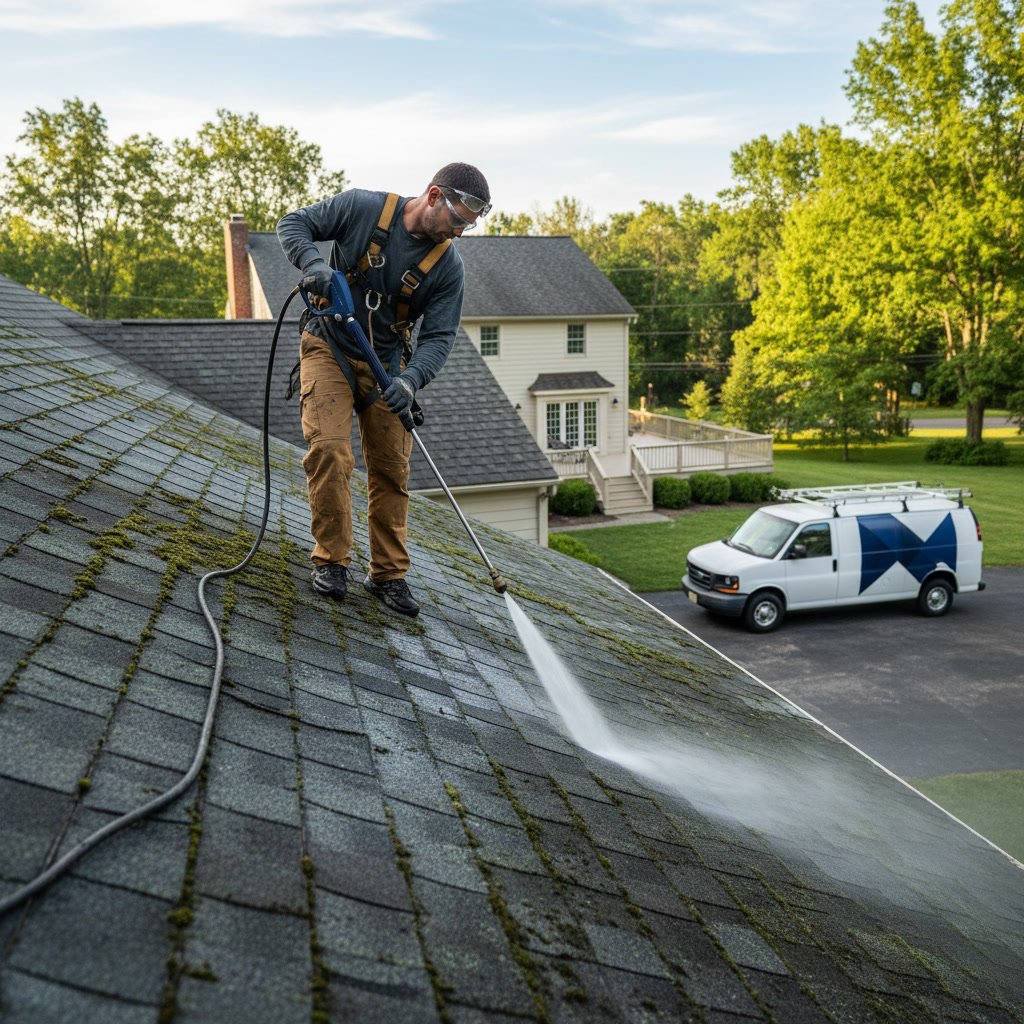
The black streaks you see on many Connecticut roofs are caused by Gloeocapsa magma, a type of algae that feeds on the limestone filler in asphalt shingles. While it starts as a cosmetic issue, it retains moisture and breaks down roofing materials over time. Insurance adjusters recognize this as a maintenance issue that increases claim probability.
What Roof Cleaning Insurance Requirements Look Like in Practice
Most Connecticut insurance policies don’t explicitly state that you must clean your roof on a schedule. Instead, they include general language requiring homeowners to maintain their property in good condition and prevent foreseeable damage. The interpretation of “good condition” varies by carrier, but visible organic growth and debris accumulation typically fail that standard.
When you receive a notice from your insurer about roof condition, it usually falls into one of three categories. A maintenance recommendation suggests cleaning but doesn’t threaten coverage. A conditional renewal gives you a specific timeframe to make repairs or improvements. A non-renewal notice means the carrier will not continue your policy beyond the current term.
The timeframe to address roof issues typically ranges from 30 to 90 days. You’ll need to hire a professional, complete the work, and submit photographic evidence or an invoice to your insurance company. Failing to meet the deadline can leave you scrambling to find coverage in the non-standard market, where premiums can be two to three times higher.
Documentation Requirements
When you hire a professional for roof cleaning, ask for detailed before-and-after photos and a dated invoice. Many insurance companies want proof that you used a qualified contractor rather than attempting the work yourself. Keep these documents in your homeowner files for future reference.
Some insurers also accept maintenance agreements or scheduled service contracts as evidence of ongoing care. A service agreement showing annual or biannual cleaning can demonstrate your commitment to property maintenance during underwriting reviews.
How Often Connecticut Roofs Need Professional Cleaning
The frequency of roof cleaning depends on your specific conditions. Homes with significant tree coverage, north-facing roof sections, or high humidity exposure typically need cleaning every one to three years. Properties in full sun with minimal vegetation may go three to five years between cleanings.
Connecticut’s climate creates ideal conditions for algae and moss growth. High humidity in summer combined with freeze-thaw cycles in winter accelerates organic buildup. Homes in West Hartford, Glastonbury, and other heavily wooded areas often require more frequent attention.
Professional cleaning extends roof life by five to ten years on average. When you consider that a full roof replacement costs between $8,000 and $15,000 for a typical Connecticut home, investing $300 to $600 in periodic cleaning is financially prudent.
Pro Tip: Schedule roof inspections and cleaning in late spring or early fall. These seasons offer optimal weather conditions and give you time to address any issues before winter or before your insurance renewal date.
The Connection Between Roof Maintenance and Coverage Eligibility
Insurance companies distinguish between sudden, accidental damage and gradual deterioration from neglect. A tree falling on your roof during a storm is a covered peril. Water damage from a roof that failed due to years of moss accumulation and lack of maintenance is not.
This distinction matters when filing claims. If an adjuster determines that underlying maintenance issues contributed to your loss, they can reduce your payout or deny the claim entirely. Your policy requires you to take reasonable steps to prevent damage, and roof cleaning insurance requirements fall under that obligation.
Regular professional cleaning also helps you identify small problems before they become major issues. During a roof cleaning service, experienced technicians can spot loose shingles, damaged flashing, or developing leaks. Addressing these early prevents costly repairs and maintains your insurability.
Choosing the Right Cleaning Method for Insurance Compliance
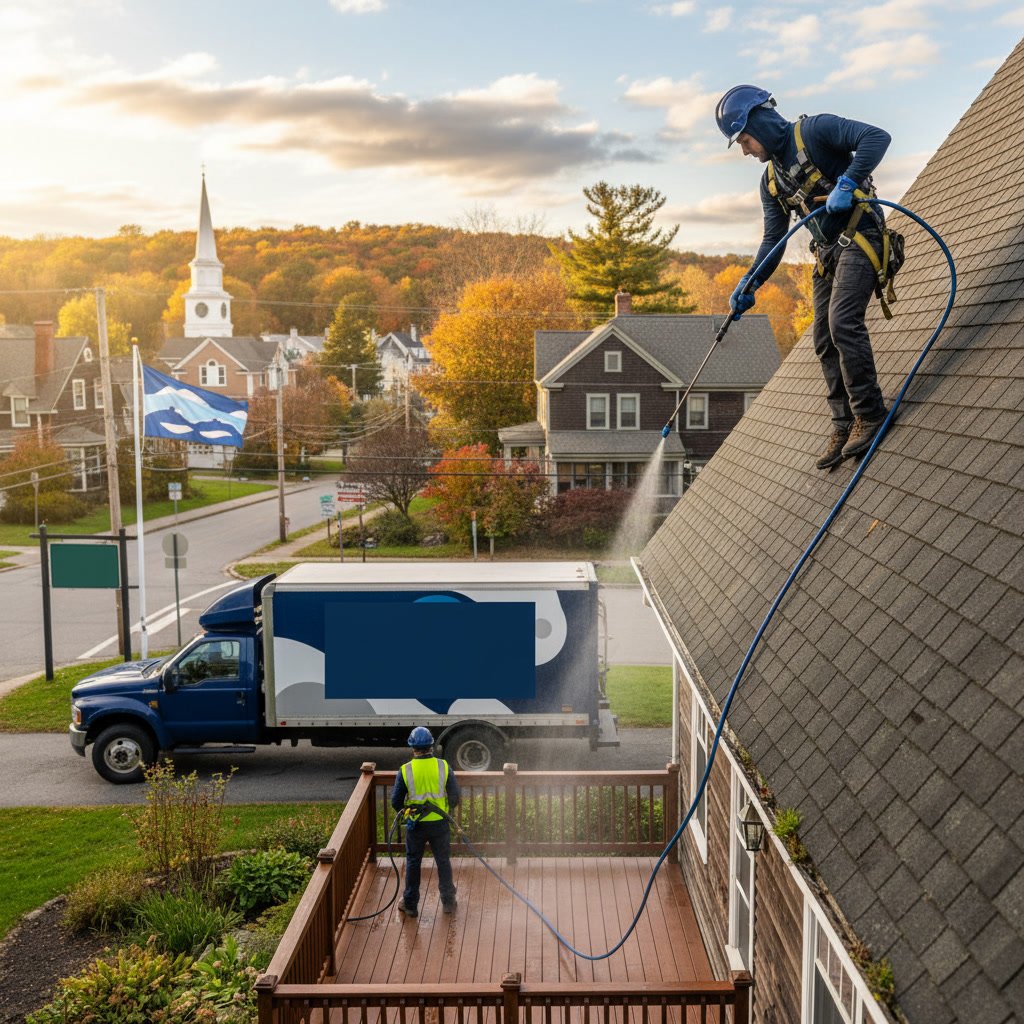
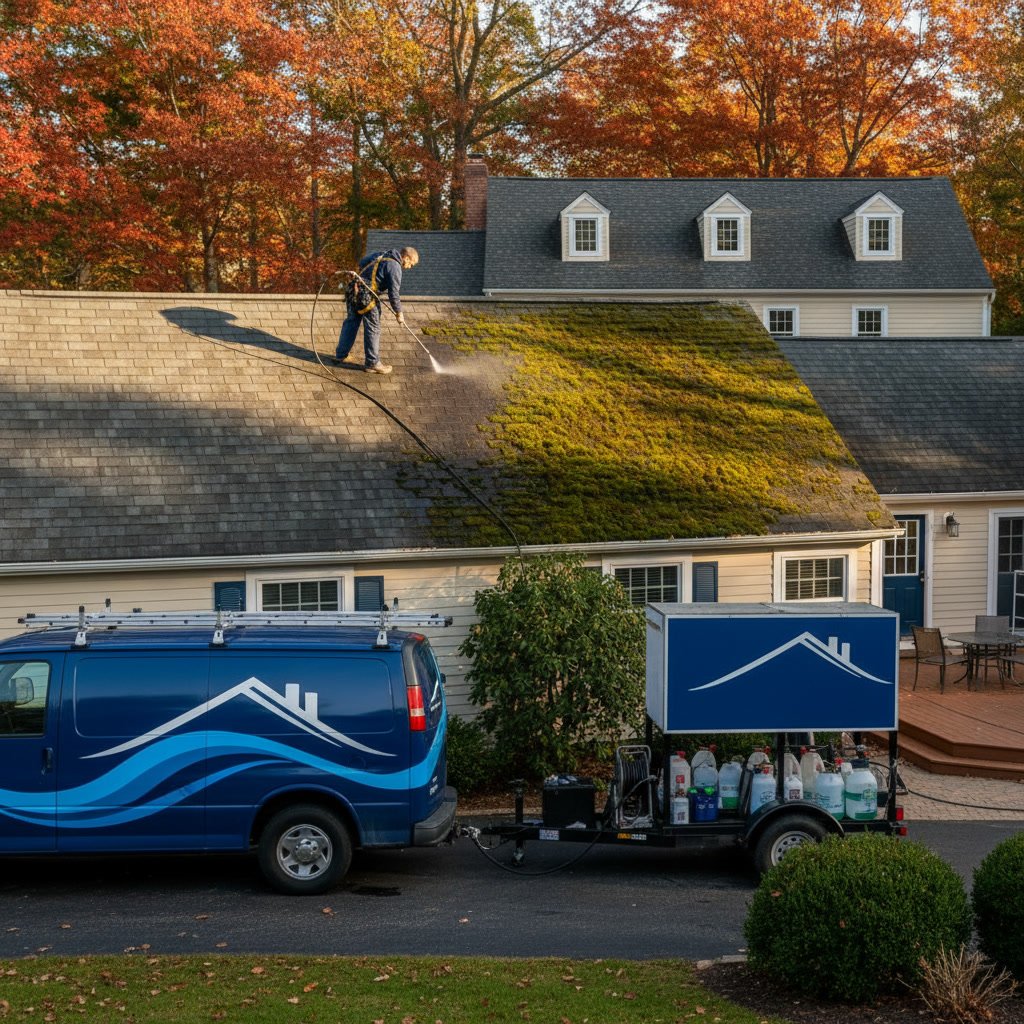
Not all cleaning methods satisfy insurance requirements equally. Some carriers specifically prohibit high-pressure washing because it can damage shingles and void warranties. The safest approach for asphalt shingles is soft washing, which uses low-pressure application of specialized cleaning solutions to kill and remove organic growth.
Our article on best roof cleaning methods for asphalt shingle roofs covers the technical details, but the key point is choosing a method that cleans effectively without causing damage. Insurance adjusters want to see results that restore your roof’s appearance and functionality without creating new problems.
Professional contractors carry liability insurance and workers compensation coverage, which protects you if someone is injured during the cleaning process. When you attempt roof work yourself or hire an uninsured handyman, you assume full liability for any accidents. This exposure can jeopardize your homeowners coverage if an incident occurs on your property.
What to Ask Your Contractor
Before hiring a roof cleaning service, verify they use appropriate methods for your roofing material. Ask about their insurance coverage and request certificates if needed. Confirm they’ll provide the documentation your insurance company requires, including photos and detailed invoices.
A reputable contractor will inspect your roof before quoting and point out any existing damage or concerns. This inspection serves as a baseline for your records and can help if your insurer later questions the roof’s condition.
Other Exterior Maintenance That Affects Insurance
While roof condition draws the most attention, insurance companies also evaluate other exterior maintenance factors. Clogged gutters can cause water damage and ice dams, leading to coverage issues. Peeling paint or damaged siding suggests deferred maintenance that increases claim risk.
Combining gutter cleaning with roof maintenance creates a comprehensive approach to property care. Clean gutters prevent water from backing up under shingles and protect your foundation from erosion. Many homeowners schedule these services together for efficiency and cost savings.
Residential house washing addresses siding and trim, which can also factor into insurance inspections. A well-maintained exterior signals to underwriters that you take property care seriously, which can positively influence renewal decisions and premium calculations.
For a complete overview of maintaining your home’s exterior, our guide to types of exterior cleaning services explains how different maintenance tasks work together to protect your property value and insurability.
Key Takeaway: Insurance companies view exterior maintenance as a package. Addressing only your roof while neglecting gutters, siding, or other elements may not fully satisfy their risk assessment criteria.
What to Do If You Receive an Insurance Notice
If your insurance company sends a notice about your roof condition, respond promptly. Contact them immediately to clarify exactly what they require, the deadline for compliance, and what documentation they need. Missing deadlines can result in automatic cancellation regardless of whether you’ve completed the work.
Get multiple quotes from licensed professionals and choose a contractor who understands insurance requirements. Schedule the work as soon as possible, accounting for weather delays that might push you past your deadline. Connecticut weather can be unpredictable, so building in buffer time protects you from circumstances beyond your control.
After completing the work, submit all required documentation to your insurance company and request written confirmation that you’ve satisfied their requirements. Keep copies of all correspondence, photos, and invoices in your permanent files. If you switch insurance companies in the future, this documentation demonstrates your maintenance history.
Prevention Beats Emergency Response
Rather than waiting for an insurance notice, establish a preventive maintenance schedule. Annual inspections and cleaning every two to three years keep your roof in compliance and avoid the stress of last-minute scrambling. Preventive care also costs less than emergency service when you’re under a deadline.
Many property owners in Hartford and surrounding communities now schedule maintenance before their insurance renewal date. This proactive approach ensures your property looks its best when insurers conduct their reviews, potentially securing better rates and terms.
The Financial Impact of Roof Maintenance on Insurance
Maintaining your roof doesn’t just prevent policy cancellation. It can also affect your premium rates and deductibles. Some insurance companies offer discounts for homes with newer roofs or documented maintenance programs. While these discounts typically range from five to 15 percent, they add up over time.
The alternative is far more expensive. If your current insurer drops you due to maintenance issues, you’ll likely pay 50 to 200 percent more with a non-standard carrier. These high-risk policies also come with higher deductibles and more restrictive coverage terms.
Consider the math on a typical Connecticut home. If your annual premium is $1,500 and you’re forced into the non-standard market at double the rate, you’re paying an extra $1,500 per year. Professional roof cleaning costs $300 to $600 every two to three years. The return on investment is substantial, even before considering the extended roof lifespan and avoided repair costs.
Regional Considerations for Connecticut Homeowners
Different areas of Connecticut face varying levels of roof maintenance challenges. Coastal properties deal with salt air and higher humidity, while inland homes contend with more dramatic temperature swings and ice dam risks. Properties near Long Island Sound may need more frequent cleaning due to moisture exposure.
Tree coverage plays a significant role in maintenance frequency. Heavily wooded neighborhoods experience more organic debris, shade that promotes moss growth, and potential damage from falling branches. Homeowners in these areas should inspect roofs twice yearly, in spring and fall, to catch developing issues early.
Local building codes and HOA requirements may also influence your maintenance obligations. Some communities have appearance standards that align with or exceed insurance company expectations. Staying compliant with these local requirements typically ensures you’ll meet insurance standards as well.
Frequently Asked Questions
Can my insurance company force me to clean my roof?
Insurance companies cannot force you to perform maintenance, but they can choose not to renew your policy if your roof doesn’t meet their condition standards. Most policies include language requiring you to maintain your property, giving them grounds for non-renewal based on visible neglect or deferred maintenance.
How much does professional roof cleaning cost in Connecticut?
Professional roof cleaning in Connecticut typically costs between $300 and $600 for an average single-family home, depending on roof size, pitch, and condition. Larger homes or those with significant buildup may cost $700 to $1,000. This investment is substantially less than the increased premiums you’d face if forced into high-risk insurance markets.
Will cleaning my roof void the shingle warranty?
Proper soft washing will not void shingle warranties. In fact, many manufacturers require periodic cleaning to maintain warranty coverage. High-pressure washing can damage shingles and void warranties, which is why professional contractors use low-pressure methods specifically designed for roofing materials.
How do I know if my roof needs cleaning for insurance purposes?
Visible dark streaks, green or black patches, moss growth, or significant debris accumulation indicate your roof needs attention. If neighbors have similar issues or your roof is more than three years old without cleaning, schedule an inspection. Taking action before your insurance company notices the problem gives you more control over timing and costs.
What happens if I can’t complete roof cleaning before my insurance deadline?
Contact your insurance company immediately to request an extension, explaining any legitimate delays such as weather conditions or contractor availability. Some carriers will grant additional time if you demonstrate good faith effort. If they deny an extension and cancel your policy, you’ll need to find new coverage quickly, likely at higher rates in the non-standard market.
Protecting Your Coverage Through Proactive Maintenance
Roof cleaning insurance requirements reflect a broader shift in how insurance companies assess risk. Rather than waiting for problems to develop, carriers now take a preventive approach that rewards well-maintained properties and penalizes deferred maintenance. Understanding these expectations helps you protect both your home and your insurance coverage.
Regular professional cleaning extends your roof’s lifespan, prevents costly repairs, and maintains your insurability at standard market rates. The relatively modest cost of periodic maintenance pays dividends through lower insurance premiums, avoided claim denials, and peace of mind knowing your coverage won’t be cancelled unexpectedly.
Patriot Pressure Washing serves homeowners throughout Hartford County with professional exterior maintenance services designed to meet insurance standards and protect property values. If you’ve received a notice from your insurance company or want to establish a preventive maintenance schedule, call +18606612407 to discuss your specific needs and timeline. Our team understands Connecticut roof cleaning insurance requirements and provides the documentation insurers need to keep your coverage intact.